Listen instead
Key takeaways
- Earth Rated started AI inside operations not because it was the most exciting place, but because operations has repetitive, high-volume, well-structured processes and an unambiguous definition of whether something worked. That made it the best place for the company to learn.
- The AI strategy was possible because the data lake was already in motion. Build the foundation before you build anything on top of it — if you let AI roam wild across ungoverned information, you get a different answer to the same question depending on how you ask it.
- Operations looks identical on the org chart in pharma, beauty and pet care — demand planning, supply planning, S&OP, warehousing, logistics, customer service. What changes between industries is what good looks like, and that difference shows up in people far more than in processes.
- In pharma the job is doing the defined thing perfectly every time and proving it, so you protect people from deviation. In retail and FMCG nobody hands you the spec, so you have to make it safe for people to try something that isn't in the playbook — otherwise they default to the playbook and you are slow.
- The people who struggle moving between industries are the ones who arrive with an answer instead of questions. What transfers is the ability to step back, read what the business needs, and adapt what you've done before instead of importing it.
- In a big company the structure catches you and the role protects you. In a scaling company you are asking people to build things they have never built, on top of their daily job, so you have to be deliberate about what you ask for and what you take off their plate.
- IT isn't supporting operations — it is operations. ERP, forecasting, purchasing and planning tools are how operations runs, which is why the person who owns operations ends up with the clearest view of how information moves through the company.
- Design for manufacturing is one of the most underrated parts of innovation. Teams fall in love with the concept and treat manufacturing as a later problem, but one closure, one substrate or one fill level can decide whether scale-up succeeds — and by the time you find out, the money is spent.
- Bring manufacturing and suppliers into the room early — not to say no, but to tell you what the design is going to cost you later while you can still change it.
- Sustainability stops being a material decision the further you take it. Natural ingredients are sensitive to light and heat, degradable materials bring shelf life and expiry into play, and every claim needs a measured baseline, because the market has lost patience with claims you can't defend.
- Cost fluency is not cost cutting. It is being able to trace how one decision — a raw ingredient, a transport requirement — ripples through the whole supply chain before you commit to it.
Operations has repetitive, high-volume, well-structured processes, and a completely unambiguous definition of whether something worked or didn't. So it was the best place for us to learn as a company.
Operations runs on systems. It isn't supporting operations, it is operations.
Teams fall in love with the concept and treat manufacturing as a later problem. It's not a later problem. It's a now problem.
Many people say this, I think, but I feel it in my bones. Do not let fear drive your decisions.
Chapters
- 00:00Intro
- 00:16Meet Antonella Gioni: Novartis, L'Oréal, Earth Rated
- 01:48A Six Sigma black belt in the guest seat
- 02:29Pharma, beauty, pet care: what actually transfers
- 03:15In pharma the spec writes itself
- 04:04The difference shows up in people, not processes
- 05:02Arrive with questions, not answers
- 05:39What a VP of Commercialization and Innovation does
- 06:46Big company vs. scaling company
- 08:00Building the plane while you're flying it
- 09:01The part nobody warns you about is the people
- 10:14Why operations and IT sat together
- 11:05IT isn't supporting operations, it is operations
- 11:42You propose the data lake, you own it
- 12:04Sequencing: the foundation before the AI strategy
- 12:43Why AI started inside operations
- 13:46The first win: an API into the warehouses
- 14:54From Tableau to AI-native dashboards
- 15:27ERP and APIs in plain terms
- 16:24Earth Rated bags in a house with no dog
- 17:26Sustainability is table stakes now
- 18:32Natural ingredients don't behave like synthetics
- 19:08Shelf life, expiry and FSC
- 19:51Baseline it or don't claim it
- 21:41What an operations brain brings to innovation
- 22:35Procurement makes you a generalist
- 23:04Most of the negotiating is internal
- 24:09Cost fluency, not cost cutting
- 24:37Manufacturing is a now problem
- 25:13Bring manufacturing into the room early
- 26:17Everybody makes shampoo. It's not easy.
- 28:38Is any spreadsheet safe from AI?
- 29:24It's not about replacing with AI
- 30:53Do the process yourself first
- 31:45Why everyone has to look at the same data
- 32:27The mountain of data governance
- 33:54The decision she almost didn't make
- 35:52Don't let fear drive your decisions
- 36:53The data lake the company almost didn't build
- 38:14The question from the last guest
- 38:41Celebrating wins, failures and everything between
- 40:24The question for the next guest
- 42:02Closing
Transcript
Lightly edited for clarity. Speakers: Ysi Gonzalez (Vantelira) and Antonella Gioni (Earth Rated).
This episode is powered by Vantelira. We go inside a scaling operation, fix the process, and build the system that keeps it running.
Introduction
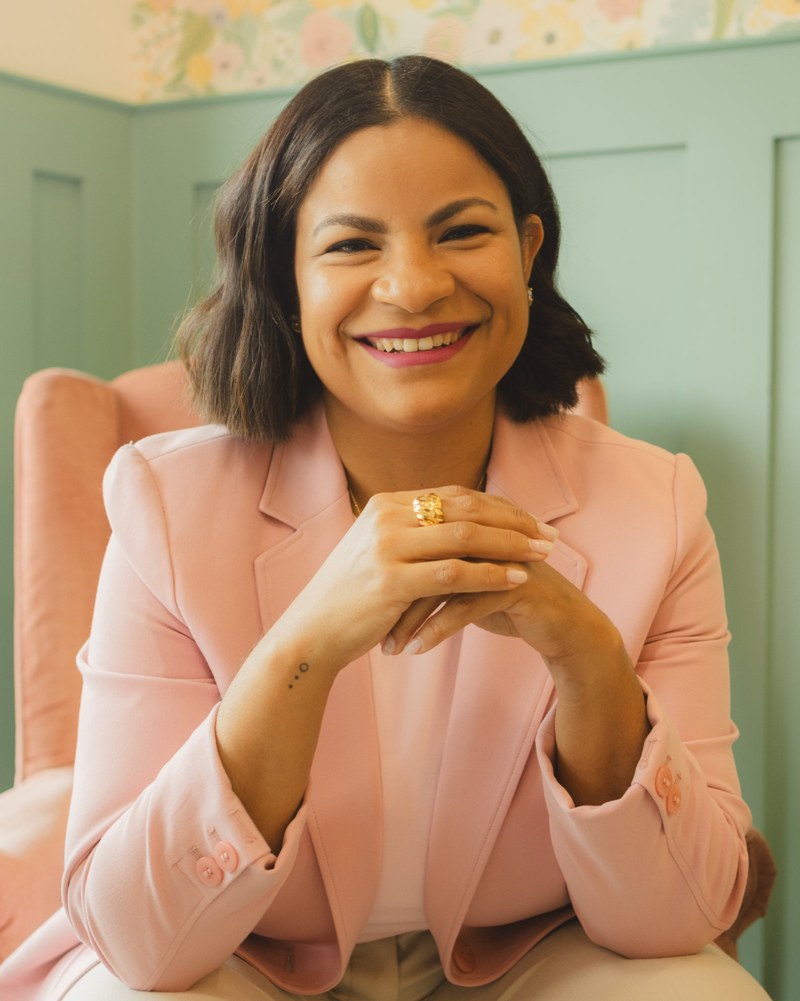
Ysi: Hello and welcome to The Forward Deployed Operator. I am Ysi, and I am here today with Antonella Gioni.
She has spent 25 years in operations and sourcing, from procurement management to operations director and head of sourcing at L'Oréal Canada, and for the last four years at Earth Rated — manufacturing worldwide and selling in more than 40 countries — first as VP of Operations and IT, and now as VP of Commercialization and Innovation. We'll get into a lot of those details later on.
Most of the people I talk to learned operations by getting burned. Antonella is the person you'd call to unburn it. From pharma, beauty and pet care, from purchasing to the executive suite. So when she says a process is broken, she earned the right to say it. Antonella, welcome to the show.
Antonella: Thank you. Thank you. I'm excited to be here. A little bit nervous — this is my first podcast. So, yay. But I'm super thrilled. Thank you for inviting me.
Ysi: Thank you so much. I talked to one of my close friends, and as soon as I explained what I wanted to do with the podcast, she was like, you have to talk to Antonella. And I'm like, yes. And here we are.
A Six Sigma black belt in the guest seat
Ysi: I will start by saying I already went through your profile and read all about you, and I found out that years ago you became a black belt in Six Sigma. I feel like I'm talking to my idol. Seriously. I am myself a green belt in Six Sigma — I recently did my certification, though I've been doing the work for over 20 years now.
For those who are listening and want to understand what that means: we have the right to tell people that their process needs improvement, and how they can improve it. And Antonella sits in the position of the one I would call for advice.
Antonella: Anytime, anytime.
Pharma, beauty, pet care: what actually transfers
Ysi: Amazing. So the first question I have for you: you've been in pharma at Novartis, global beauty at L'Oréal, and now pet care at Earth Rated. From everything you have been doing, what are the skills you would say have actually transferred? Because these are all different styles, different products and different supply chains.
Antonella: On paper, the function is identical everywhere, right? We have demand planning, supply planning, S&OP, warehousing, distribution, logistics, customer service. We know what the function is, and the boxes on the org chart don't really move. What does change is what good looks like and what is needed.
In pharma the spec writes itself
Antonella: In pharma, I find the spec writes itself. You're operating under very prescribed GxP, Health Canada audits, controlled storage and transportation. Doing the defined thing perfectly every time, and being able to prove that you did it, is what works — and what we're looking for in terms of people.
In retail, in FMCG, nobody hands you the spec. You have to be where the consumer is, and you need to be there fast. The core skill is judgment around ambiguity: finding a route when the usual route won't get you there in time. Those are the skills that are a little bit different.
The difference shows up in people, not processes
Antonella: The difference shows up most in people, not in processes. Sometimes it means hiring a different profile or personality. Most often it means the same person needs to be guided a little bit differently than the way you would do it in pharma.
In pharma, I'm protecting people from deviation. In retail or FMCG, I'm giving people room to try something that isn't in a playbook — and you're making it safe for them to do that. Because if it isn't safe, they're going to default to the playbook, and you'll be slow.
Arrive with questions, not answers
Antonella: So what actually transfers is not really in the processes. It's the ability to step back, read what the business needs, and adapt what you've done before instead of importing it. The people who struggle moving from one to the other, I find, are the ones who arrive with an answer instead of the questions.
That's what I've learned: question more, and find out where you can give people room to grow, to adapt and to ask those questions.
What a VP of Commercialization and Innovation does
Ysi: Interesting. Everything I'm hearing is that people need to learn to figure it out in this environment. Talking a little bit about your role at Earth Rated — it's called VP of Commercialization and Innovation. What does that mean?
Antonella: That one is a little bit different from supply chain, because there's a lot of marketing aspect to it, and it really involves development of product. What we did was put a few functions together that would make it more seamless — from creating the product and developing something new, right through to designing for manufacturing and dealing with the contract manufacturers or suppliers, including quality, and then right through to the customer experience.
That's what we've done now at Earth Rated: try to make it seamless from development of product right to launch. That's what I'm responsible for.
Big company vs. scaling company
Ysi: Amazing. Earth Rated is a big organization, but it's not necessarily as large as L'Oréal or Novartis. In terms of having a big-company infrastructure behind you, have you felt a difference in how Earth Rated works compared to the larger organizations of the world? Tell us a little bit about those differences.
Antonella: I always assumed the logical career path was starting in a smaller company, learning, getting all your basics, and then earning your way up to the multinationals. I did it in reverse — but I actually would recommend it.
Big companies are a great school. L'Oréal and Novartis have largely solved how to go to market. There's a structure around you that tells you if you're really off course. You learn what good looks like before you have to invent it.
Building the plane while you're flying it
Antonella: What changes in a smaller, scaling company is that the structure isn't there to catch you. No system waiting, no established processes, no team that already owns the thing. So you're building the plane a little bit while you're flying it.
If you need structure, that's a frightening environment to be in. If you can let go of needing it, it's actually freeing: nothing you propose gets automatically filtered through a large, settled picture of how things are supposed to work.
But it demands a different skill set. In a big company you're mostly improving something that already exists, adapting it a little for your particular environment or ecosystem within that big machine. Here, you have to hold a picture of how it should eventually work, and then break it into phases small enough that the team can actually deliver them.
The part nobody warns you about is the people
Antonella: The part nobody warns you about is how much of it is about the people. In a big company, the role protects you. In a smaller one, you're asking people to build things they maybe never built before, on top of their daily job. So you have to be more deliberate about what you're asking for and what you're taking off their plate.
I got that wrong before I got it right. So that's something that's very different between a big company and a smaller company.
Ysi: It's very refreshing to hear you say that, because just in the past two weeks I've had many conversations with peers in the operations and process improvement world, and we all come back to the same conclusion: it's all about the people. How we learn about them, and how we adapt our way of directing or guiding them — this is where I want you to go, and because I understand how you work, let's make it accommodating for you.
Why operations and IT sat together
Ysi: I'm very curious, because before this role in commercialization and innovation, you held the title of Operations and IT. What are your thoughts on why those were together at that point? I have theories, and I want to hear your side.
Antonella: Honestly? Somebody had to run it. That's how it goes in a company that's growing faster than its org chart. I put my hand up, and here you go — oh, you put your hand up, you have an opinion, I guess you own it now. That was really refreshing, actually, because I was enthusiastic. I really wanted to have an input there.
IT isn't supporting operations, it is operations
Antonella: And it made a lot more sense than one would think. Operations runs on systems: your ERP, your forecasting tools, your purchasing tools, your planning. It isn't supporting operations — it is operations.
If you understand how operations connects to everything in the company — the financial systems, the CRM, the commercial data — you end up with the clearest view in the building of how information actually moves through the company, and how the systems should be talking to each other.
You propose the data lake, you own it
Antonella: One of my first recommendations — something I learned at L'Oréal and then brought to Earth Rated — was to build a data lake. That's partly how I ended up owning it. You propose it, you own it.
What owning both let me do was sequence things properly: building the foundation before building anything on top of it. So when the question of AI came up, and it became a conversation instead of a slide, we weren't starting from zero. Data was already part of the picture. We were able to put an AI strategy in place because the data piece was already in motion and being developed. That's also how we came to create a dedicated AI role in the company.
Why AI started inside operations
Antonella: And we started AI inside operations, to be honest with you. Not because it's the most exciting place — there are a lot of places AI can be beneficial — but because operations has repetitive, high-volume, well-structured processes, and a completely unambiguous definition of whether something worked or didn't. So it was the best place for us to learn as a company.
Ysi: You can't see it, but my heart is glowing. This is what I live and breathe for: that connection between the operational side of things and the business automation of it. Because, as you say, it's the place where standards can actually be made and repetitive tasks can be done. And once you have that data governance in place, you're set.
The first win: an API into the warehouses
Ysi: You mentioned you started with AI in operations. Do you want to share some examples?
Antonella: Yes. We had a lot of manual processes, being a smaller company, and we weren't fully integrated with all of our warehouses. Things were set up through an FTP site or other ways of communicating. A lot of emails going back and forth.
One of the first things we did as a team was bring in an API that connected their system with ours, so information could flow from their system directly into our ERP. So rather than the team having to go and chase information, the information was pushed to them so they could do their job. It was quite transformational, and in the end it really drove a lot of action instead of chasing information and follow-ups.
From Tableau to AI-native dashboards
Ysi: And all this information ended up in a dashboard for them, I would assume?
Antonella: The dashboards came a little bit later. At the time we implemented Tableau. Now we use a lot of AI capabilities in the company to view dashboards or view information. It's become very seamless — we don't really need to develop outside dashboards anymore.
ERP and APIs in plain terms
Ysi: Great. And just to put it in layman's terms, because I expect this will be heard by people who don't necessarily know what an ERP and an API are: the ERP is the enterprise resource planning system. It's the base of everything that happens inside operations in a company. And the API connections are what make it possible to have a hundred different systems giving you information — from Shopify, from the warehouse management system, from wherever the information sits — and have it in one place.
That's what my question was: is it in a dashboard now? Your team has one place where they read the data, instead of, as you said, going after it — which used to be very time consuming. Or still is, for the companies that are not there yet.
Earth Rated bags in a house with no dog
Ysi: And there's something about Earth Rated, by the way. I don't have a dog — and I'll show you, for the people watching on YouTube. I do not own a dog. However, for some reason, I have these bags in my house. Is this how far Earth Rated goes?
It's so funny, because I told my daughters I was speaking to Antonella today, from Earth Rated — the green bags, the pet care brand. And my oldest daughter was like, "We have those here." And I'm like, you do? They serve for everything. I keep them in the car, and whenever there's garbage or something the kids need, I just use them.
Antonella: Very convenient. Good stuff.
Sustainability is table stakes now
Ysi: One thing I do like about the brand is the promise of sustainability, and that has a direct impact on the operational side of things and on sourcing. How is that working? How do you deal with that type of supply chain?
Antonella: Sustainability was a very major driver at L'Oréal as well. So when I looked at Earth Rated, it resonated with me immediately. That was a part where I was like, oh, I love that about them.
Honestly, today it's table stakes. Anyone in sourcing will at some point be asked to bring it into the conversation and find the financial equation that works. The difference is how far you take it and the intention of the company. Because the further you go, the faster it stops being just a material decision, and becomes not just a supply chain decision but a company commitment.
Natural ingredients don't behave like synthetics
Antonella: A few concrete examples. Fully natural ingredients don't behave like synthetics. They can be more sensitive to light and heat. So suddenly your packaging choice matters, and your transportation and your storage are all part of that formula — that financial decision you're taking. It's not just downstream. It's all of it. It doesn't become just a sourcing decision of, I'm going to buy something that's recyclable. It's really about having a commitment.
Shelf life, expiry and FSC
Antonella: Some materials degrade over time — that's the entire point of them. So that means shelf life. Now you're worried about expiry management. Categories you wouldn't think of with certain products now become something you have to think about.
FSC is another one. You're not just thinking, oh, I want to find a supplier that uses sustainable forests. You need to go all the way upstream in the supply chain to find out what forests they're actually cutting from, and what that means for the whole supply chain cost.
Baseline it or don't claim it
Antonella: The last piece I would talk about is measurement. Once you've made a commitment out loud, you need to baseline it. You need a way to actually measure whether you're having any impact. Otherwise you're making claims you can't defend — and the market has gotten a lot less patient with claims you can't defend.
So it's not necessarily just a supply chain question or a sourcing question. It has just become so table stakes that everybody in sourcing needs to understand all of that.
Ysi: That's very interesting.
Every system you fixed became someone else's win. The next one has your name on it. An eight-week live cohort. You solve a real problem inside a real company, ship a working AI system, and leave with the case study, the build and the title: Forward Deployed Operator. Join the waitlist at fdoschool.com. That is fdoschool.com.
LiliBloom makes personalized wooden and acrylic keepsakes out of Montreal. It is my choice for any keepsakes that I want to give to my friends, my family, my customers. First birthday photo boards, cake toppers, first day of school signs, anything in between and anything you need. Every piece is thoughtfully designed and crafted with love, care, and an eye for detail, making your celebrations and your gifts even more special. Find them on Etsy as LiliBloomShop. That's L-I-L-I-B-L-O-O-M-S-H-O-P. LiliBloomShop.
What an operations brain brings to innovation
Ysi: What do you think having that operations brain — bringing all that knowledge from all the experience you've had — brings to your role now in commercialization and innovation? Where you can see, oh, if I had not been in operations before, I wouldn't have caught this?
Antonella: Definitely understanding that design for manufacturing is one of the most critical pieces for companies. Understanding that every decision you make in how you build something is going to make a difference. There are two things I can say that really stayed with me.
Procurement makes you a generalist
Antonella: The first is that procurement — purchasing, sourcing — makes you a generalist. You get pulled into whatever the company needs. You're breaking down cost sheets on Monday, you're framing spec sheets on Tuesday. You learn to define the needs of the company in a way that even the users are not always able to do. It's harder than it sounds.
Most of the negotiating is internal
Antonella: People say that's being a negotiator, but I don't think of it as a negotiation or a supplier activity. Most of the negotiating I do now is with internal people — not even with suppliers. It's with marketing: what do we need in the product? With finance: what do we think it's going to cost? With a plant: is this actually buildable? Do they have the machinery to build it?
We can think up any product at the end of the day, and that is fantastic. But if a manufacturing site can't build it, or it's going to cost more than people want to pay, you're making mistakes at the innovation stage that are going to affect you. Those are things a procurement or sourcing leader automatically brings to the table, because that's how they're thinking in every discussion they have, with suppliers or internally.
Cost fluency, not cost cutting
Antonella: The second is cost fluency. Not cost cutting, which we usually associate with sourcing. It's the fluency — being able to talk about costs and understand how one decision ripples through potentially many different things. You can talk about the cost of a particular raw ingredient, but if it requires the entire supply chain to change, or to do something differently transportation-wise, you have to put all of that in.
Manufacturing is a now problem
Antonella: Design for manufacturing, for me, is one of the most underrated parts of innovation. Teams fall in love with the concept and treat manufacturing as a later problem. It's not a later problem. It's a now problem.
One design change — a closure, one substrate, a fill level — can all affect whether your scale-up is going to be successful. And by the time you find out, the company has spent a ton of money already.
Bring manufacturing into the room early
Antonella: So I push my teams to bring manufacturing into the room early, and to bring suppliers into the room early. Not to say no — it's not about saying no in the organization. It's really: tell us what this design is going to cost us later, while we can still do something about it in the design process. Does that make sense?
Ysi: It does, a lot. I already took some notes, because I want to tap into that specifically — I've lived it many, many times. It's common for a brand in its very early stages to walk in and figure things out as it goes. But at the stage a company like Earth Rated is at, you're able to have those discussions while the rest of the company is running and you're bringing in new products. You take the time to make those decisions.
Everybody makes shampoo. It's not easy.
Ysi: I want to ask you: is there anything out there in the market right now that consumers might think should be easy, but was actually a pain to put together?
Antonella: Oh my goodness. One of the products we put out a few years ago is dog shampoos — a deodorizing mist and a rinseless shampoo. That was one of the first times the company really put out this type of liquid product with all-natural ingredients.
So when I talked about those examples of natural ingredients being a little bit touchy — it's going to get frozen, it's going to get overheated as it travels the world — those are things we had to think about when we were doing stability testing and developing it with the manufacturer. It took us longer than we anticipated. We were like, oh yeah, shampoo. Everybody in the world makes shampoo, so it's easy. But it's not so easy. There's a lot to think about, and we want to stay true to our brand and to providing the best.
I'm very, very proud that the company launched those shampoos. They're some of the best products — the no-rinse and the deodorizing mist as well. Those were a big achievement for the company: understanding how to manufacture and transport liquids and get them around the world was something new for the company.
Ysi: As soon as you said shampoo, I was like — the shampoo! Everybody does make shampoo. But it's true: if you want to stay true to the ingredients and to the statement the company has made, it comes with its own twists. Let's call it that.
Is any spreadsheet safe from AI?
Ysi: I'm probably going a little bit off script here. You use Excel, I guess?
Antonella: We use Google. Spreadsheets.
Ysi: A spreadsheet. Is there any spreadsheet your team uses, or one you've seen in the past with a sourcing team, where you're like: this is never getting replaced with AI? Nobody's going to be able to accomplish this?
It's not about replacing with AI
Antonella: Honestly, I don't think so. Listen — it's not about replacing with AI, right? AI will not just make something. There have to be humans behind it who actually understand what they're going to use a spreadsheet for, and what insights they want to get from it. We're not just making spreadsheets. We're doing it because we're gathering data that's going to tell us something, so that we can make decisions.
The stance I take is about taking the parts of the job that are time consuming and don't bring the value you want, so that you can spend the time looking at the insights and solving problems — for yourself or for the company — and making the most of that data. So will it go away? I don't necessarily look at it that way. I look at it as: is there something we can use that helps us get to the decision faster, or see the insight better or faster? That's how we're going about it.
Do the process yourself first
Ysi: Amazing. One example I use with my customers: do the process yourself first, then teach AI how to do it, and you'll see where you still need to be plugged in — as you said, with the human behind it. Everybody thinks AI is coming for our jobs. No, somebody has to teach AI how to do it. And it changes with products, with companies, with different structures. It's not as easy as it's just going to replace everything.
Why everyone has to look at the same data
Antonella: No, no, no. And honestly, you still need somebody to take the output, and we still have communication in the company. We make other decisions from whatever comes out of it. You have to revalidate.
That's one of the reasons building a data lake is so important. You need everybody looking at the same data in the same way. Because if you just let AI roam wild in your information, you will get a million different responses to the same question, depending on how you ask it. You really have to do things in a way that won't throw you off the rails. You can't just jump into AI. We really built a foundation first.
The mountain of data governance
Ysi: You said it with your data lake. It brought me back to previous roles where I was part of a huge transformation, building a data lake for a large organization. It's a struggle to build it the first time, because people end up calling vendors by three different names in three different systems, and then you have to merge that. I'm very passionate about data governance, by the way. But what happens after you're out of that mountain is beautiful. The amount of improvement you can do — the acceleration takes off much faster.
Antonella: Exactly.
Ysi: And you mentioned understanding where we're automating and improving, where it's going to bring value. I'm also teaching a class on how to do this forward deployed operator role. We have a cohort that already started. We train people to identify where AI is actually going to bring value, based on Lean Six Sigma methodology, and then you learn how to build. I can see the Six Sigma brain going left and right: no, there's no value here, move on to the next thing.
The decision she almost didn't make
Ysi: What is one decision where you were like, we shouldn't do this — then you did it, and it actually changed something in the business?
Antonella: The example I was thinking about is actually not in operations. It's something meaningful and personal to me that had an impact. When I received the call to move to Earth Rated, I was happy at L'Oréal. There was no burning need to move. Why would I personally take such a risk? If I make a mistake, I'm leaving a company I have a lot of respect for, where for all intents and purposes I was very successful, for a smaller and, in my eyes, less known one.
I nearly walked away from it. I didn't, because while I was very fearful, I also felt confident. There was an ambition to do good at Earth Rated. One of the founders is a woman, which resonated with me. I believed in their ambitions. So there were many boxes ticking. But I was very scared. I almost did not make that move.
In the end, I felt like I could make a difference. And it's honestly been one of the best decisions I've made. It opened up an entire organization to me in a way I was not able to reach at very large multinationals. It gave me a chance to input, help drive direction, and have very concrete accomplishments beyond what I thought was possible.
Don't let fear drive your decisions
Antonella: Many people say this, I think, but I feel it in my bones: do not let fear drive your decisions. Whether it's in your personal life or jumping into a project — like I did — when the opportunity comes up, jump in. You will figure it out. If you're the kind of person who can adapt, who has great judgment, who is confident about the skills you can bring to the table, just don't let fear stop you.
Ysi: Thank you for sharing that with us. You said it was a personal choice, but you came to the same conclusion we reach in business. There are a lot of decisions we don't make in operations, or across businesses, that are driven by fear: fear of failure, fear of not achieving revenue, fear of delaying things with customers. But sometimes we need to make those decisions, if all the other boxes do tick.
The data lake the company almost didn't build
Antonella: Yeah. And from the IT world we had built, it was very, very forward-thinking of our founder, Abby, to say: okay, we're going to look at a data lake and invest in something whose payoff we couldn't fully envision. We knew we had to build data, we knew we needed to centralize it in some way — it was more about many people having access to that information at the same time.
But once you get in it, you realize: data governance, streamlining the language around the different acronyms and terms that different groups in the company use differently. It helps put everybody on the same playing field when it comes to using data, and it helps us make better decisions. That was another one we almost didn't do as a company. And if you look at it from the bigger picture, that investment paid off big time.
Ysi: Yeah, and it will keep paying off, I promise you.
The question from the last guest
Ysi: We have a tradition on the show where a past guest leaves a question for the next one. I will ask you the question that was left for you, and then I'll give you some context on who's coming next so you can leave your question for them. The question that was left for you was: how do you celebrate your wins?
Antonella: Earth Rated is very big on this. One of the core values in the company is celebrating — wins, failures, birthdays and anniversaries. You can celebrate many things. It's not just about the wins. You need to talk about when things don't go well, and celebrate the fact that we tried it. We're going to switch, we're going to pivot, but it was not lost. Nothing is lost.
So: celebrating wins, good projects, good achievements in the year. We have town halls where we're constantly celebrating, and we include the teams. We have many little traditions, or rituals I would say, where the team itself is able to pass the recognition along.
It's about building a culture of celebration. It doesn't always have to come from the top. We have the traditional performance reviews and all of that, talking about our accomplishments and our wins. But even the little wins within the teams — recognition between colleagues, between departments — are super important. Those are some of the ways we've brought celebration in as a core value of the company.
The question for the next guest
Ysi: Good. The next guest who is coming has a brand — a growing brand. That's all I can reveal. So what would you leave as a question for them?
Antonella: If it's a growing brand, they will have to transform and change things. One of the things I think companies that are scaling and growing should think about is: what is the operational capability you built in the last year that two or three years ago you would have called a luxury?
If you can't answer that question — if you don't know what you've built in the past year that you once thought was a great big thing, but today is either table stakes or part of who you are — then you can't be growing. You have to have that mentality of saying: this used to be something fantastical two years ago, and today it's part of the way we do business, an everyday thing.
So that would be my question for somebody who's scaling: identify those things that two years ago were a luxury, and today are how you do business.
Closing
Ysi: Thank you so much, Antonella. It has been my pleasure to hear you talk about supply chain, operations, innovation and IT. Thank you so much for taking the time to talk to us today.
Antonella: Thanks for inviting me. This has been fun, and I wish you all the best.
Ysi: Thank you. Until the next one.
That's it for this one. Follow the show so the next episode finds you, and the newsletter goes out every Tuesday — the link is below. See you next time on The Forward Deployed Operator.
Related
- What Is a Forward Deployed Operator? cornerstone
- What Has to Be True Before You Just Add AI episode 8
- Fix Your Data Where It's Born episode 3
- What is a Forward Deployed Operator? episode 1