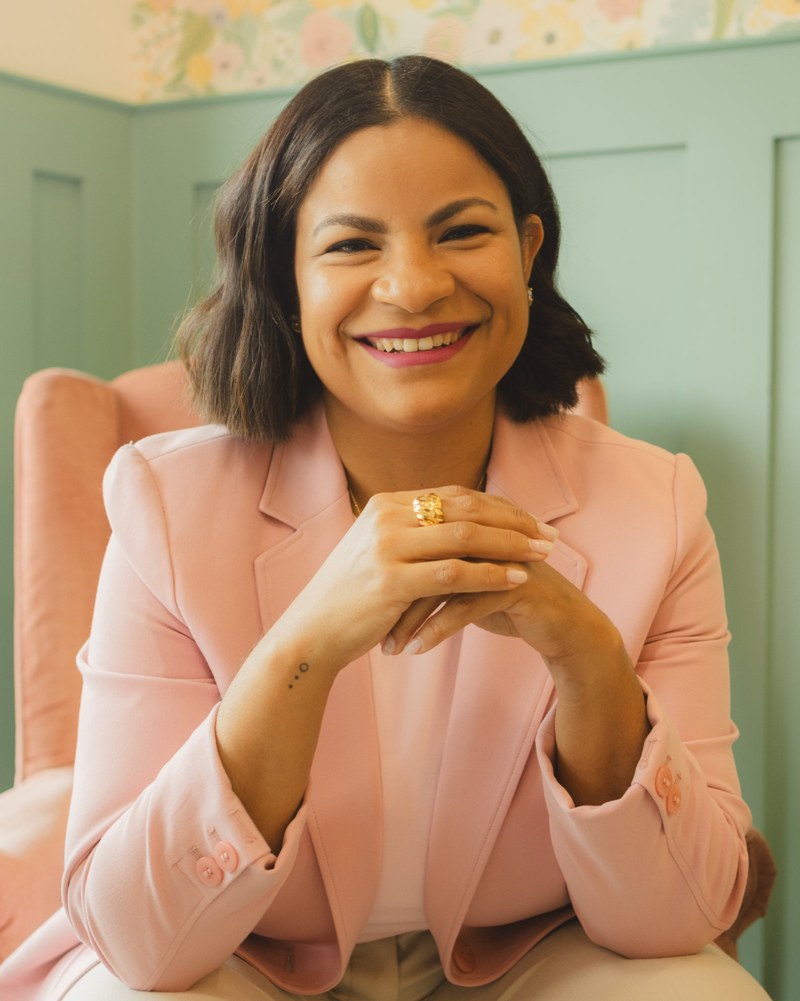
Emma Lukian and her husband Nikita started making kimchi in their kitchen in 2020, after losing their catering company overnight. Every co-packer they approached said no, and none of them were wrong to. Fermented food is alive. It is volatile, it has to be cold-poured, it does not behave like a pasteurized product you can make and pack the same day. Their own competitors told them it could not be done.
It took five years. The thing that finally worked was not finding a better factory.
Key takeaways
-
When no manufacturer will take your product, the problem may not be that you have not found the right one yet. It may be that the system does not exist. At that point you are not searching, you are building.
-
The reframe that ended a five-year search: stop looking for a co-packer who can already make your product, and start looking for one curious enough to build the process with you. Once the criteria changed, the partner appeared almost immediately.
-
A retailer's yes can be conditional on certification you do not have. Metro's listing offer was contingent on SQF, and without that certification a fermented product cannot leave its home province at all.
-
The eight-to-twelve week timeline a retailer quotes is not the real timeline. Good Big Nice was approached in July 2024 and launched in June 2025. The eleven months were protective, not lost: they used the time to learn promo calendars, chargebacks, unloading fees and refrigerated freight scheduling from other founders before those things could hurt them.
-
The one number worth automating from day one is contribution margin per SKU per channel. Not revenue, not gross sales. Knowing actual cash per channel earlier would have changed the trajectory of the business.
-
Manufacturing flexibility beats manufacturing scale for an early brand. No minimums and the ability to slot a small production once a month is worth more than volume capacity when your forecast is an educated guess.
-
Make decisions based on where you intend to end up rather than where you are today. Thinking small is the default, and it quietly costs you the work you have to redo later.
Listen instead
Transcript
Lightly edited for clarity. Speakers: Ysi Gonzalez (Vantelira) and Emma Lukian (Good Big Nice).
Introduction
Ysi: I am here today with Emma Lukian, co-founder and CEO of Good Big Nice, a Montreal kimchi brand. This is The Forward Deployed Operator, where I sit down with the people who have lived the operational reality of building something real. Not the highlight reel. The actual back end. The co-packer that fell through, the order that did not ship, the spreadsheet holding the whole company together.
Emma took a live fermented product from small batches all the way to direct distribution with one of the biggest grocery banners in the country, and earned a few scars on the operations side getting there. Emma, welcome.
Emma: Thank you so much. Such a nice intro.
Ysi: That was my version of you. Before we get into the messy stuff, I want to hear yours. For people who do not know Good Big Nice, who are you?
Emma: My name is Emma Lukian, I am the co-founder of Good Big Nice. We are a fermented foods company based in Montreal. We specialize in kimchi, and we also do sauerkraut and pickles, but kimchi is really our foundation.
I started the company with my husband in 2020, and since then we have grown from doing it at home in tiny batches to a full-blown SQF certified operation servicing over 900 points of sale in Quebec, now growing into the rest of Canada.
Ysi: I love it when somebody gets from their basement to somewhere it is actually happening. That is what a lot of brands want to learn: how do you get there. And I want to remind everybody, that was 2020. Six years in October.
It is not from day one that you are as big as you want to be. It takes work, infrastructure, process, scars, learning.
Emma: And a lot of adapting. The company we ran for the first four and a half years is different from the company we run now. There was a full turning point. So it has been six years, but in my mind it feels like two.
Do you know your biggest bottleneck?
Ysi: There is a tradition on this show where the previous guest leaves a question for the next one. The person who left it knew they were leaving it for someone on the brand side, running their own operations at scale.
Here is the question. Before you make your next hire, before you bring somebody in to fix your operations, there is one thing you should be able to answer yourself: do you know what your biggest bottleneck or constraint is right now?
Emma: I do. My biggest bottleneck is that I do not have a big enough team.
Ysi: Good to know. What we usually find is that you might think that is the constraint, and it helps to understand why.
Emma: Our bottleneck is there are too many heads doing too many tasks. Some people should be focused on bigger, zoomed-out things, and instead we get bogged down in day-to-day work. It is too messy. It is a perfect question, because we need to start hiring somebody new.
Losing one company and starting another
Ysi: Take me back to the start of Good Big Nice. When did you realize this was what you wanted to do?
Emma: Before we started, my husband Nikita and I had a company prior to the pandemic. We were doing office catering, and part of our menu, the sandwiches and salads, used fermented foods. We were using kimchi and sauerkraut, we could not find it anywhere, and what we could find we did not like. So we were making it ourselves. People loved it.
When we lost the company overnight, like a lot of people did, we spent the summer of 2020 asking what we were going to do, because I did not want to go back to a nine to five. We needed to pivot.
It was Nikita's idea. He said, if we cannot find kimchi to put in our menu, that means other people cannot find it either. There are not many products available in grocery stores. Let us put this in a jar and see what happens.
So we made one phone call. One. We called a little local grocery store here in the Plateau, just to ask whether there would be any interest. And they placed an order for product we truly did not have. We had no business saying yes to that order. We did anyway.
Ysi: When did you realize this was going to be operations heavy?
Emma: It took me a long time to fully get on board. We were both committed in the sense that we never went back to other jobs, but personally I was reacting to losing the company. He had this idea, the grocery store said yes, and then it was react, react, react.
About a year in I stepped back and thought, hold on, I think this is something we are actually going to do. Let us put a plan on paper and commit to it mentally. Nikita believed it on day one.
Ysi: And it is part of his culture to be eating this constantly. Would you say it matters for whoever is behind the product to genuinely know it from the inside?
Emma: It made a huge difference for us. Nikita grew up in Russia and had the habit of eating these foods his whole life. I grew up in Quebec and it was not part of my culture. Having him say yes, everybody should be eating this, every grocery store should have it, kept pushing us. Otherwise there would have been a few moments where I said, I do not know, I do not think enough people know this product, it seems too niche, too tough. He was the engine.
Why every co-packer said no
Ysi: Going from one grocery store saying yes, to having your own co-packer. A lot happened in there. I read that you built one of the first SQF certified kimchi productions in Canada.
Emma: It is one of the first, yes. Top three, if we wanted to say it that way.
Ysi: How did you get from shipping orders out of your house to that?
Emma: We started in the house, and within about six months moved into a small facility we built ourselves. A little commercial kitchen. We always knew that place was on borrowed time. It was too small, we had a very low ceiling on how many jars we could produce per month, and this is a low-margin product. We needed volume if we wanted to make any money.
Finding a co-packer took almost five years. Everyone told us no. Co-packers and non-co-packers. Our competitors told us they could not do it for us. People told us flat out: you will never find a co-packer for this, it cannot be done, fully impossible.
And it made sense. We contacted so many co-packers and they all said no for very good reasons. Fermented food is alive. It is a volatile product. It is not a pasteurized ketchup you make one day, pack the same day, and keep outside the fridge. It is constantly changing. You have to cold-pour it. It is not a liquid. There are so many parts of doing this at scale that are genuinely difficult and are not the baseline of how a factory works.
The snowstorm and the trial that failed
Emma: For a messy story: while we were on this journey, someone finally told us yes. They said, come do a test with us, we will try making the product. The only week you can come is this week.
It was a week we had a vacation planned with friends. We cancelled it. We drove seven and a half hours through a huge snowstorm with our baby and with Nikita's dad, because someone had to watch her while we worked. We almost died on the road, there was a total whiteout.
We got there, and within two minutes Nikita and I looked at each other and knew. This is not going to work. They cannot do this for us. We felt so defeated. It was really hard.
Stop looking for a factory. Find a partner.
Emma: That was the turning point, where we had to start asking why. Everybody is telling us we cannot do this. Everybody is saying no. We kept looking, and it felt like forcing a square peg into a round hole.
So: we are not going to find it, because the system does not exist yet. Let us find a co-packer who is willing, or curious enough, to build this with us. Someone open enough to say, this sounds cool, we could maybe see something here. And find a way to incentivize them to want to try.
Once we started looking for that person instead of looking for the factory that already worked, it was almost overnight. We found them immediately. Just the right people.
Ysi: Recognizing that this is not working, but I am not dropping it, I am going to shift the ask and find somebody willing to work with me. Rather than adapting the product to whatever the market already has, or giving up.
Emma: I think that happens to a lot of people. There is a certain amount of systems that already exist, and if yours does not fit into them, we are programmed to think, well, it does not work, I need to change something. But if the system does not exist yet, and you are pretty certain you could make it work, you have to build the system yourself.
Metro says yes, and hands them an ultimatum
Ysi: Were you already in large grocery before you had the co-packer?
Emma: We always wanted a co-packer, because those are two separate career paths. You are either running a factory or you are running a brand. We never wanted to do both.
But once Metro said yes, that changed things. They approached us in July 2024 and said they wanted to list our products, and that they would get us on shelves in eight to twelve weeks. They also said they could not accept our products the way they were, because we needed some form of very strict safety certification. That is SQF. Whether it is SQF or HACCP, you need a strict, rigorous safety program in place at your factory to bring in a product that is fermented.
So the summer of 2024 was when we knew: if we do not get a co-packer, we do not get Metro. And we also cannot grow. Where else would we go? We would not be able to get anybody. You cannot leave your province with a fermented product without that certification.
Metro saying yes was the fire.
Emma: It helped us hit the turning point, where we started saying we need to look somewhere different, we need to shift how we are looking for this partner.
Why eleven months beat eight weeks
Ysi: Was that the only operational obstacle, or was there something where you thought, nobody warned me this would take all of this?
Emma: For us it was a bit different. If we had gotten onto shelves in eight to twelve weeks like Metro said, then yes, all of those things would have hit. Nobody told me about the promo calendar, or the chargebacks, or unloading fees, or that it costs an arm and a leg to ship refrigerated pallets and that you have to schedule it. All these operational and logistics things I would not have known.
But because it took so long, and Metro called in July 2024 and we only launched in June 2025, that is eleven months to get the co-packing relationship and system built. During those eleven months we were talking to everybody we knew who was already doing direct to distribution centres. So we got the heads up on all of it.
So no, there was nothing where I thought, whoa, I was not expecting this. But only because I took my sweet time.
Ysi: You say sweet time, but depending on the commodity, I have seen co-packer proposals where R&D alone is a two-year process. Not eleven months. It is important for brands at that inflection point, deciding whether to go with a co-packer facility or build their own manufacturing, to know it does take time. Grocers and distributors are aware of this. It is part of the process.
Emma: Actually, now that you say that, it made me think of something. Maybe that is what I did not consider. When Metro approached us and said eight to twelve weeks, we stressed so much. We ran around like idiots. We hired new employees. Hurry, hurry, we have to do a production. This was before we understood we really needed the co-packer.
We were panicking. If somebody had said, relax, nothing is happening tomorrow, that would have helped. Now we have new contracts opening and I think, yeah, okay, in a year from now, we have got time.
Why they pulled back from the US
Ysi: Are you exporting to the US?
Emma: No, not yet. It was always on our roadmap, but when the de minimis situation and everything else started happening, we pedalled back and shifted. We said, let us keep doing really focused, targeted markets in Canada. There are still so many markets for us here, not just retail but food service and industrial sized, all these other things. So we decided to focus there instead of exporting for now.
Ysi: That is a whole other can of worms when you want to export outside the country. And now with the recent CUSMA announcement about annual renewal, you do not really know what is happening year to year.
Emma: How are you supposed to make decisions when there is such a huge variable every year and you do not know what will happen?
Forecasting on a spreadsheet and a prayer
Ysi: Do you do production planning? How does that work? How do you look at your demand?
Emma: We have a system in place, a good old Excel sheet that helps us forecast as best as possible. We do a best case, a realistic case and a worst case, and we plan production around realistic and best.
It is simple. It is based on what we know our volumes already are and where we hope they will be. Any contract we might be in talks with, we plan production hoping it goes through so we have enough stock.
We are also lucky, we have a long shelf life. Twelve months. So we do not have the same tight logistical constraints as someone with a thirty-day product, where you are being very careful because you do not want to lose stock. We have more flexibility.
But honestly, forecasting and projections for production is a little bit a hope and a prayer. There are so many variables. We just started working with Sobeys recently, and we do not know what the volume will look like. You make the best educated guess you can, but you do not want to overshoot, because that wrecks your cash flow, and you do not want to undershoot either. It is a delicate dance.
Our co-packer partners are fantastic, though. We do not have a minimum. We can do smaller productions, we can slot one in once a month. So we have a lot of flexibility.
Ysi: Flexibility is very important in CPG, in any product-based industry. Flexibility in your manufacturing is what takes you places, because anything can happen. I have seen a container fall off a ship going from China to the Dominican Republic. You have been waiting six months for that product, and then it is sorry, we have to call the insurance, it is in the middle of the ocean.
So being able to produce fast, with small or ideally no minimums, matters enormously.
Excel is not going away
Ysi: You said your old Excel sheet. I have worked at enterprise level and planned over thirty thousand SKUs in Excel sheets. It happens. Excel is not going away.
No matter how much AI we put into things, people ask me for features, because sometimes we end up building a workflow or a custom tool. And the one thing I keep hearing is: can you put in an export button so I can export to Excel? But you have a dashboard that tells you everything. No. People need to massage the information. And by people, I mean me too.
Emma: I love an Excel sheet. Love and hate.
What she actually uses AI for
Ysi: Is there anything you have automated in your processes internally? Are you using AI of any sort, or not yet?
Emma: I do, but at a really basic level. Answer this email, respond to this. Double check my calendar to see what I should be paying attention to. Double check these emails, tell me what is most important to answer.
But in terms of using it to automate any kind of workflow, I am still just not there. I know, I know.
Ysi: Your mommy should be using it.
Emma: I know. But you know what it is? It is because I do not fully understand how to properly use it, how to use proper prompts. So when I try, I feel like I make a mess more than anything else.
Ysi: So you are going to have to sign up for the podcast, and you are going to hear a lot of tips and tricks on that.
The one number she wishes she'd tracked from day one
Ysi: If you had an AI assistant embedded from day one, what is the one decision it should be flagging you automatically?
Emma: I want it figuring out my contribution margin, so that I actually know how much money I am making. For each SKU, for each channel.
Ysi: I have heard the CEO of Organic Traditions talk about unit economics the same way, that it was the thing she needed to understand early to make the trajectory different.
Emma: It took us a long time to actually figure out how much cash we were making, and not just revenue or gross sales. Way longer than I want to admit. If I could have had that automated from day one, it would have made us make some different decisions at the beginning, for sure.
Thinking like a big business before you are one
Ysi: What is the one operational decision you almost did not make that you think changed the business?
Emma: The co-packer one is a big one. Not that we almost did not find one, but I can see many moments where we almost wanted to give up and say, forget it, we will do something else.
But it is not so much one big decision. For a while, we were thinking very small. It took me a long time to accept that I should be thinking like a big business even though I am a small business, and I did not want to for a while.
It was Nikita who said we need to be making decisions today based on where we want to end up. As soon as I stopped resisting that, things changed. That was the thing I almost did not do. I almost kept thinking small, because it is what is happening in the present. Clicking into that mindset, stop making decisions based on where you are today and start thinking forward, changed a lot. It made me stop wasting time on things that only served me in the present and do not serve me at all today.
The question she leaves for the next guest
Ysi: To continue the tradition. The next person in this seat will be someone involved in solving operational problems, in their own business or for somebody else, in any industry, product or not. What is the one question you want them to answer?
Emma: I want to know when was the lowest they ever felt. When they really thought, this is it, I am quitting, I am not solving this problem, I am not figuring it out, I am throwing a match behind me and walking away.
Because when I have asked that question of other founders and friends, the answer is surprisingly silly. It is usually something so small. You would think it would be a massive problem, and they say no, it was the one day that order was late and I just said, I am out, I am done.
So: when did they feel the absolute lowest, and did they really consider quitting?
Ysi: I am going to add to that. How did they get out of that, and what made them switch.
Ysi: Thank you so much for this, Emma. I really appreciate it.
Emma: And this is the reality. You want to see the messy reality behind growing a CPG business when you have two kids. This is what it is. We just deal with it.
Ysi: We have to adapt. That's it.
Related
- What Is a Forward Deployed Operator? (cornerstone explainer)
- Co-Packer Vetting Checklist (the vetting checklist and the six pre-screening gates)
- Supplier & Co-Packer Rate Negotiation (toolkit)