
TL;DR
- The margin you trust is only as good as the moment it was born. A founder we work with had priced their whole catalog off a costing file with stale inputs and a formula that measured the wrong thing. Their best seller was earning pennies. Cleaning the report never would have caught it, because the report was faithfully copying a lie.
- Bad source data is the real bottleneck behind “our numbers feel off.” The fix is never another dashboard. It is fixing the number where it enters the business, then wiring everything downstream to pull from that one place.
- This week, open your master costing file and ask one question: who owns keeping this current, and what price is the margin calculated against? If you cannot answer both in ten seconds, you are running on numbers that were born wrong.
There is a moment we see on almost every engagement, and it always sounds the same. A founder opens the spreadsheet the whole business runs on, goes quiet, and says some version of: “wait, these numbers are fake.”
That is exactly how this one started. We were sitting down to set wholesale prices for a new retail distributor. To do that, we opened the master costing file, the one file that is supposed to tell you what each product costs to make and therefore what you earn on it. The founder looked at it for about thirty seconds and said the previous file did not apply anymore, the numbers did not exist, we would have to start over. They were right. And the version they had trusted since the business started had been quietly wrong for years.
We have rebuilt the numbers behind brands from a few hundred thousand dollars in revenue up past eight figures, and the same thing is true in almost every one: the operation is not broken. The data is. Every wrong forecast, every underpriced hero product, every “how are we this busy and not making money” quarter traces back to a number that was captured wrong the day it was born, and then copied faithfully by every report downstream.
That is what this week’s podcast episode is about, and this is the full build behind it.

“Those numbers are fake”
Here is what was actually inside the file, because the specifics matter. There were three defects, and all three were baked in at the point the data was entered. Not downstream. At birth.
The inputs were stale. The ingredient and co-packer costs in the sheet had never been updated on any real schedule. One co-packer’s product was sitting in the file at a per-unit price close to a third higher than the corrected invoice actually showed. Another product’s ingredient cost was entered well under what the co-packer was truly charging once the co-packer’s processing was folded in. Nobody had done anything wrong on purpose. The numbers were just old, and old numbers look exactly like current numbers in a spreadsheet cell.
The formula measured the wrong thing. This is the one that had been hiding in plain sight the longest. The “margin” column everyone had trusted for years was calculated against the direct-to-consumer retail price. But almost all of the real volume shipped wholesale, to distributors and stockists, at a much lower unit price. So the margin number was structurally overstated on every single wholesale sale, by design, from the day the sheet was built. The founder kept asking why the business felt busy and profitable on paper but the bank account never agreed. That was the reason. They were reading a retail margin on a wholesale business.
The data had no home. When we asked who owns this file, whose actual job it is to keep it current, there was no answer. The costs lived in emails, in PDF invoices, in the founder’s memory. The pricing file did not even link to the ingredient-cost file. As we said in the room that day: none of it is in one place, and none of it is calculated. It is transcribed.
Put those three together and you do not have a spreadsheet problem. You have a business making its biggest decisions, pricing, sourcing, what to discontinue, off numbers that were wrong before anyone ever opened the report.
The fix that is not a fix
The instinct, when the numbers feel off, is almost always the same: clean it up. Update the ingredient costs. Rebuild the dashboard. Add a column. Buy a tool that “gives you real-time margins.”
We watched this brand do the honest version of that. They had, at some point, gone in and updated some of the ingredient costs. And they were still catastrophically wrong, which is why the founder’s most painful question that day was: “why were we so off all this time? We updated the ingredient costs.”
Because updating inputs does not help when the formula underneath is measuring the wrong price. And a new dashboard does not help when it is pulling from the same file that has no owner. You can pour a clean, real-time visualization on top of a number that was born wrong, and all you get is a faster, prettier wrong answer. This is the whole trap of buying software to fix a data problem: the tool inherits the defect and scales it.
Cleaning data downstream is bailing water. Fixing it where it is born is patching the hull.

Fresh, defined, owned: the three checks a source number has to pass
Before you rebuild anything, you have to be able to name what went wrong at the source. Across the operations we have been embedded in, bad data is almost never random. It fails in one of three ways, and this brand’s file failed all three at once.
The enterprise data world has a name for fixing this upstream instead of downstream: shift-left. You move quality to the point where the data is produced, the system of record, and enforce it there with what data engineers now call a data contract, a plain agreement on what “good” means and who owns it. Forward deployed engineers have been building this way for years. It reduces to three checks, and they are the same three whether you run a Fortune 500 data pipeline or a costing sheet in Excel.
Fresh? (timeliness). The number was accurate once, and nobody owns keeping it current. Input costs, lead times, freight rates, conversion factors. These are not facts you learn once. They drift. If no one’s job is to refresh them, the sheet is a photograph of a business that no longer exists.
Defined? (validity). The number is calculated against the wrong reality. A margin taken on retail price when you sell wholesale. A cost that excludes the biggest line. A “profit” that never had overhead built into it. The math is clean; the definition is broken. This is the one no dashboard catches, because the report is doing exactly what it was told. In data terms, the semantics are wrong, not the arithmetic.
Owned? (provenance). The number has no system of record, no single source of truth. It lives in emails, invoices, memory, and a chart someone made by hand once. There is nothing to update, nothing to trust, nothing to pull from. Every time you need it, someone rebuilds it, slightly differently than last time.
If you only remember one thing from this issue, make it this:
Fresh, defined, owned. A number that fails any one of the three was born wrong, no matter how clean the dashboard on top of it looks.
Run any critical number through those three questions, is it stale, is it measuring the right thing, does it have a home, and you will find your source defect in about five minutes. That diagnostic is free, and it travels well. Send it to any founder who tells you their numbers “feel off.” The rebuild is where the work is, and that is next.
The rebuild: how we fixed it at the source
We did not patch the file. We threw it out and rebuilt the point where the numbers are born, so that accurate margins would come out the other side without anyone having to relitigate them every quarter. Here is the full sequence.
1. Reconstruct from ground truth, line by line. We rebuilt the cost model from the actual current co-packer invoices, not from the inherited file. Every ingredient got its own line. That sounds obvious and it is the single most important move, because a bundled “cost of goods” number hides exactly where the money goes.
2. Break out the volatile inputs. Anything whose price swings, a key commodity input being the obvious one for this brand, gets its own dedicated line so a price move is visible at the input instead of buried inside a blended total. When that input jumps, you want the model to flinch in one specific cell, not quietly erode every affected product’s margin where no one can see it.
3. Enter the real conversion and packaging costs. Processing, packaging, and shipping went in from the actual agreed prices, not estimates. These are the lines founders most often wave off as “small,” and in aggregate they are frequently the difference between a product that earns and one that loses.
4. Fix the formula: margin against the price you actually sell at. We recomputed margin against the wholesale price, because that is how the volume moves. If you sell most of your units at wholesale, your default margin has to be the wholesale margin. The retail margin is a nice-to-know, not the number you price and negotiate against.
5. Give the file an owner. One person, one standing job: keep the source current. A cost model with no owner is already decaying the day you finish it. This is not a tooling decision, it is an accountability decision, and it is the step teams skip most.
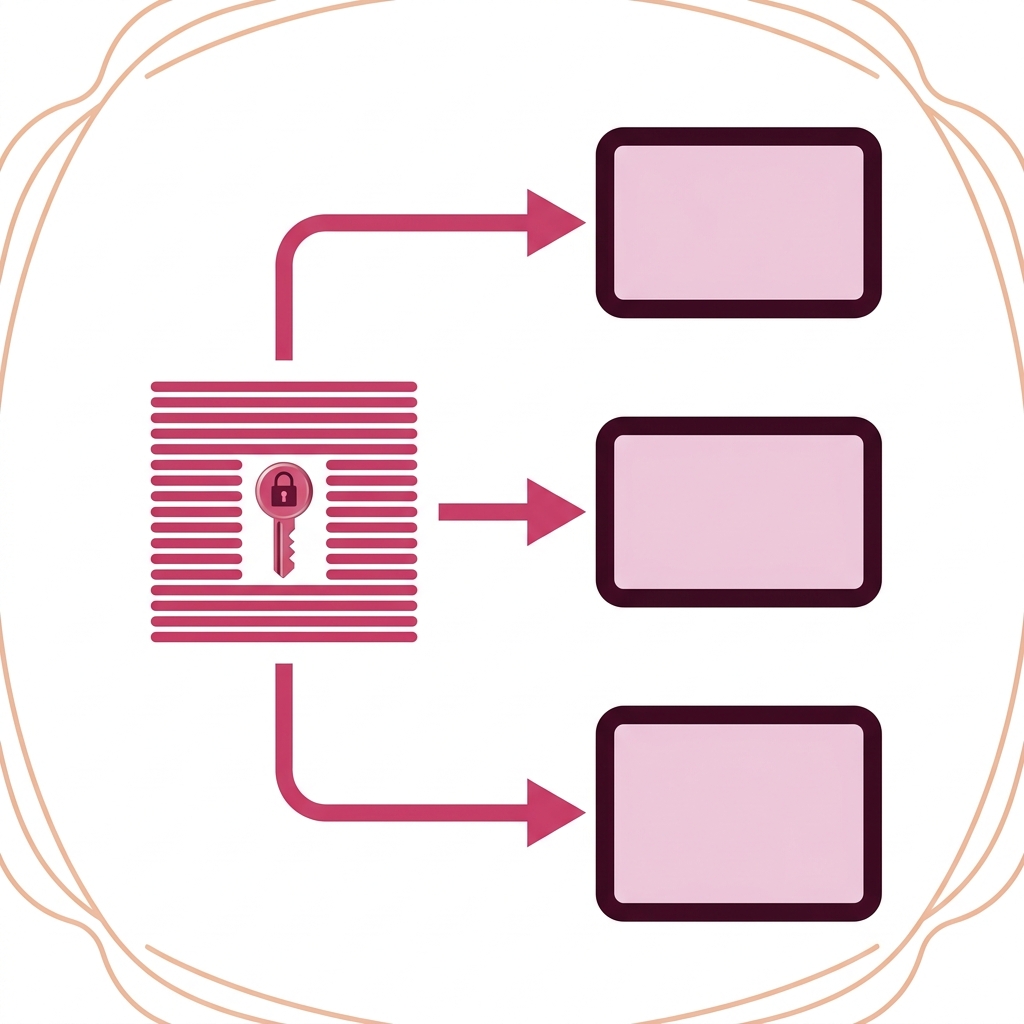
6. Wire it once, so downstream pulls from the source. The pricing sheet now pulls from the cost sheet. Change a co-packer cost in one place and it flows through to every product’s margin and every quoted price automatically, instead of being hand re-keyed in four files that then disagree with each other. This is the whole game. The source becomes the single place the truth is entered, and everything else reads from it.
One more place data is born wrong: the product record
The costing file is the loudest example, but the same principle showed up somewhere quieter on the same brand, and it is worth seeing because it is where most operators get bitten next.
When they moved to a new fulfillment provider, we hit a classic product-master-data problem. A single product record could not tell the difference between one unit sold direct to a consumer and a case of six sold wholesale. Those are completely different animals: different pick fees, different packing, different shipping economics. Left as one record, orders would route wrong and cost wrong, and every downstream “what did fulfillment cost us” number would be garbage.
The fix was made at the point the product is set up, not in a report. We created two records per product, an “each” and a case version, so every incoming order self-routes to the right pick path and the right cost by construction. Nobody has to remember to adjust anything. The data is correct because of how it was defined the moment it was born.
Same law as the cost file: define the data correctly at the source, and the downstream numbers take care of themselves.
It goes one layer deeper: the margin that was never profit
There is a more advanced version of the definition failure (check 2) that is worth naming, because it catches even disciplined operators. On a later profitability pass, we found that the target margin this brand aimed for, a number in the low forties that looked perfectly healthy, had never had overhead built into it. It was a theoretical figure. Products could show a “good” margin and the business could still make no money, because the margin was defined at the model level to exclude the costs of actually running the company.
This is the trap: you can hit your margin target on every product and still not be profitable, if the target was born measuring the wrong thing. The fix, again, is at the source. Redesign the costing methodology so overhead is embedded in the per-unit cost from the start, the way a restaurant costs a plate, so that the margin number means real take-home profit the moment it is calculated, not a hopeful gross figure you back out of later.
What it unlocked
Once the numbers were accurate at birth, decisions that had been stuck for months got made in a single sitting.
The best-selling product, long believed to be a healthy earner, turned out to be clearing low single digits, a few cents a unit. A hero product everyone thought made well over a dollar of profit was actually making pennies, and several items were quietly losing money on every wholesale case shipped. The founder’s reaction was the one we hear every time the source data finally comes clean: “how did we not know that?”
With real numbers, we could act. We lifted several retail and wholesale prices on the spot. We flagged products to reformulate: cut an expensive ingredient out of a product, shrink an oversized formula. We identified what to discontinue. And, most usefully for the conversation that started all of this, we knew the exact price we needed to negotiate down to with each co-packer to hit the target margin, walking into that negotiation with a real number instead of a hope.
The accurate margin was no longer something to relitigate every quarter. It had become a by-product of a model that was correct at the source. We then reused the exact same rebuild on a second product line. That is the tell that you fixed it in the right place: the fix is reusable, because it is structural.

Build this yourself, Monday morning
You do not need us in the room to start. You need ninety minutes and your real invoices.
- Open the file your business prices off. Run the three checks out loud: Is it fresh? Is the margin defined against the price you actually sell at? Is it owned?
- Pick your top-selling product. Rebuild its cost from the most recent real invoices, one ingredient per line, volatile inputs on their own lines. Add processing, packaging, and shipping at real agreed prices.
- Recompute margin against your actual dominant sales channel, wholesale if that is where your volume goes.
- Compare the new number to the old one. The gap is what you have been pricing and negotiating on blind.
- Assign one owner to keep the file current, and write down the date you rebuilt it. A cost model without an owner and a date is already going stale.
If step four makes your stomach drop, that is not a failure. That is the first honest number your business has had in a while.
The tool was never going to save you, because the tool faithfully copies whatever it is fed. Fix the number where it is born, give it an owner, and accuracy stops being a project and starts being a by-product.
Know a founder pricing off a spreadsheet they inherited and never questioned? Forward this to them. It is the ninety minutes that pays for itself.
P.S. The full episode behind this build, “Fix your data where it’s born,” is live. If you want the story in Ysi’s voice, with the moments that did not fit here, listen at vantelira.com/podcast. And if you read this far and you are not on the list yet, this is where the whole playbook lives. Subscribe and the next build lands in your inbox.
OPS INTEL
Agentic AI’s number-one blocker is data, not the model 👀 Enterprises are moving from AI pilots to production “fleets,” and the reports keep hitting the same wall: data readiness and quality, not the model, is what stalls deployment. A confident agent pointed at a number that was born wrong just makes the wrong call faster.
The enterprise data world is “shifting left” to fix quality at the source ↑ Data contracts, quality gates, single source of truth: the exact playbook in this issue, now standard practice on Fortune 500 data teams. Define what “good” means and who owns it, then enforce it where the data is created, not three systems downstream.
Ocean rates from Asia unwind after the early-August spike ↓ Rates jumped past 7,000 dollars a container, then slid back toward the mid-5,000s as importers held cargo and waited. Freight is a volatile input: if it sits as a guessed number in your cost sheet, your landed cost is guessed too.
Truckload costs keep climbing year over year despite a spot-rate lull ↑ The seasonal easing in spot rates hides a sharp year-over-year rise in what shippers actually pay. Freight belongs on its own dated, owned line in your cost model, not buried in a blended cost of goods.
Tariff compliance shifts to entry-by-entry as more derivatives get swept in 👀 Proposed Section 232 duties on additional steel, aluminum, and copper derivatives mean landed-cost inputs are moving again. Every time a duty changes, the cost model that was “done” is stale until someone re-runs it.
We go inside growing brands, find what is actually broken in the operation, and build the infrastructure that makes the fix permanent. We diagnose, we build, we get it running, and then we leave. If your numbers “feel off” and you are tired of finding out at quarter-end, that is the work.