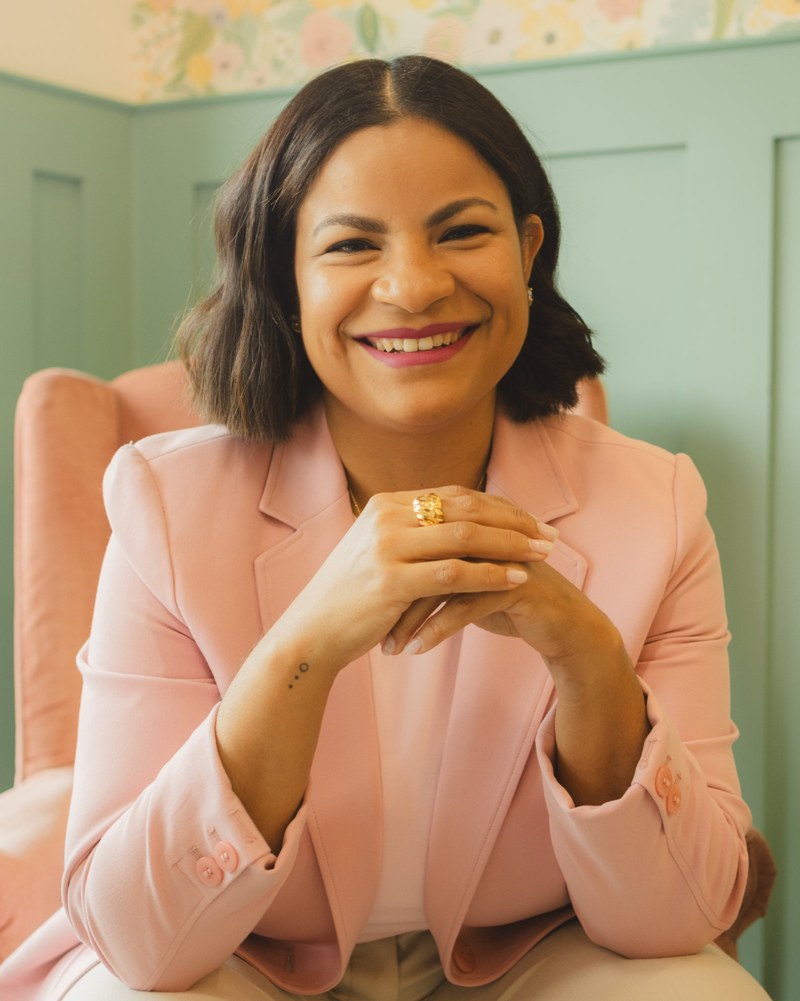
In October 2024, Nutterie launched a chocolate category. It went so well that within months roughly three quarters of every order had something chocolatey in it. Then came a hot May, and an email: I received my order and my chocolate was melted.
Mariela Katz had one week to fix it. Not next month, not next quarter — the orders were already going out. The constraint she set herself was that the customer would not pay for the solution. This is what she did.
Key takeaways
-
A freshness promise is an operational commitment, not a marketing line. Nutterie packs every bag to order because at eight orders a day there was no reason to do anything else — and by the time volume arrived, the difference was visible enough that going back was never considered.
-
The standard path a packaged product takes — pack, warehouse, distributor, grocery warehouse, shelf — is longer than customers imagine, and every step of it is shelf life being spent before anyone eats anything.
-
Selling by weight instead of by unit changes what inventory means. A build-your-own platter deducts per component, and a kilogram of mini pretzels and a kilogram of roasted salted cashews occupy completely different space for the same weight. That problem has to be solved in the system, not on the packing table.
-
Overpaying on shipping in year one bought something real. Nobody will negotiate with a brand that has no volume history, so the expensive first year produced the shipping record that made every later negotiation possible.
-
When you need a solution this week, minimum order quantities are a filter, not an obstacle. The widely-used insulated box came with a one-truckload minimum and a month's lead time, which made it the wrong answer regardless of how good it was.
-
You can validate a fix without a lab. Nutterie packed boxes in three sizes, left them in the sun outside the warehouse for a full day, and opened them. That was the test.
-
Marketing is an operations event. A single SMS send to 25,000 subscribers puts enough orders into the queue to back up the packing line, so promotional sends are now deliberately split across two days.
Listen instead
Transcript
Lightly edited for clarity. Speakers: Ysi Gonzalez (Vantelira) and Mariela Katz (Nutterie).
Introduction
Ysi: Hello and welcome to The Forward Deployed Operator. I'm Ysi, and I'm here today with Mariela Katz. She is the co-founder of Nutterie, the Canada-wide direct-to-consumer nut, seed and dried-fruit brand she launched in 2023. The model is easy to say and hard to run: skip the middleman, import direct, pack every bag fresh per order, and ship it across the country.
Before Nutterie she built and sold a marketing agency, which means Mariela walked into a physical, perishable, operationally heavy product as a marketer — and I believe she learned the operations the hard way, in public, one Canadian summer at a time. Mariela, welcome.
Mariela: Thank you for having me. This is such a good recap. Yes to all of it.
Ysi: I've been following you for a while now, and I'm so glad the world put us together last summer.
Why a marketer started a nut company
Ysi: I gave a very summarized version of the journey. How do you end up deciding you're done with marketing and you want to get into food — nuts, more specifically?
Mariela: I'm so happy we're chatting today, because it's been three years now. We're just celebrating our third anniversary.
We've done a few chapters, let's put it that way. And as I said, I have learned a lot of those chapters the hard way — which in my books is the only way. If you don't do it yourself, you won't really be able to learn it, or see what you might be missing, or where the flaws are.
What Nutterie actually sells
Mariela: So: Nutterie, three years, direct-to-consumer brand. We recently opened our retail component with our smaller-format bags — these ones — and we have sixteen of those now. But on the website we have over 250 SKUs, which is a lot. I am aware.
My mission is to offer that choice to my consumer, to be essentially their only destination for everything that is pantry related.
Three years ago, direct to consumer, we import all of those goods directly. From there we roast, coat and mix everything in house, and then we pack that directly for our clients' orders — one order at a time.
Ysi: I'm still in shock when I hear the whole model, how you have built it. It's incredible. And you can feel it as a consumer — you can feel the freshness of everything you get. It's a very high quality product.
I ordered this week, and I had to bring the product to the office and hide it, because my daughters saw the box and they were ready to open them and eat it. And I'm like, no, no, wait. I have a couple of things to do with it first.
Why every bag is packed fresh per order
Ysi: Packed per order — never going onto the shelf prepacked, which I believe is where a lot of that freshness comes from. How do you manage that? How have you come to make sure that every time a customer places an order, you just pack it and ship it?
Mariela: This is something we didn't necessarily start with as our mission. We didn't say we are going to pack every single bag per order, forever.
But initially, when you're starting a brand new brand, you have eight orders or three orders a day. So what else are you going to do? You know what I mean? And I didn't want to prepack things, because I know the shelf life, and how much fresher it could be if it's packed fresh per order.
So we simply started like that, and we just never stopped, because we saw the difference it makes. Now it's absolutely become part of our mission. It's our statement. But it's not something we necessarily thought about at the beginning. It was simply the beginning, and we saw the difference it made.
What happens to a bag that gets prepacked
Mariela: No one else in the industry is doing that, by the way. Everyone is prepacking hundreds of bags at a time, with machines. So those bags are sitting and sitting and sitting until they are finally purchased. Which we don't do.
And you know how it goes, right? They sit at the warehouse, then they go to the distributor, then they go to the warehouse of the grocery store, and then they go to the actual shelf. It's longer than what people might be thinking.
And there's another side of it. We're very fortunate — and it's also part of what we do best — that we import all those products direct. When you think about all the other brands out there doing nuts or mixes or nutty snacks, however you want to call it, they are basically buying from us or someone like us. Most of them are not sourcing those products direct. So it makes a whole difference.
Ysi: It's amazing to hear you describing the supply chain you've built. It's part of the reason I started this series with the CPG brands of the world — people see the brands on the shelf and they don't necessarily know exactly what it takes to bring it to life.
And you said it yourself at the beginning: you believe learning operations yourself is the best way. And it's the example of you starting to pack your orders, because at the beginning there's not that much volume, and then realizing — wait a second, this is actually a business model that works, and it's actually better for the brand.
Planning inventory when you sell one kilogram at a time
Ysi: Let me ask you how difficult it is to plan for your inventory when you have to say, I need this much cashews in this format — because you're removing the layer of the format. And I talk about cashews because that's my favourite one.
Mariela: With that model come many challenges that we have really, I think, nailed to this day. Touching wood. But it works.
We work with a platform I think everyone knows, Shopify. I have my first milestone here sitting.
Ysi: Oh my god, congrats. What was the target for that one?
Mariela: This one was the 10,000th order. Last year. And we're still looking forward to our second one at our 100,000th order, which we hope will be early next year.
We worked with Shopify initially simply because we have the inventory. Let's start with that — we always have the inventory. So it's not like I need to order something in order to have it. For the most part I have the inventory, especially on the raw ingredients.
Now, the transformed ingredients — whether that is roasted, roasted salted, coated or mixed — that's when I need to have inventory, or to make inventory. And once again, even on the roasting and the coating, we're very lucky because we're doing that ourselves. So it's an internal process. I speak with my team, I make sure the order is passed for that, and it's in the works in the next few days. If it's something rushed we can make that happen. I don't depend on anyone on the outside for that, which I think is the biggest benefit.
We have played a lot with Shopify in order to make sure that everything works in terms of inventory. It's one kilogram at a time that we're selling. It's not like I'm selling only to retailers, where I know I've sold one pallet of this mix and that's very easy to pull out of my inventory. When I have 250-plus SKUs selling one kilogram at a time — heads up and thank you to Benoit, our inventory manager, who does an incredible job keeping up with what we've sold and what we're producing. Our inventory comes out one kilo at a time.
The virtual nut bar: weight versus space
Ysi: It's a shout-out to the people working behind the scenes.
Mariela: And I'll go a little bit more specific, because just yesterday we were talking about it. We launched our virtual nut bar last year. So you can make your own platter, or your own mix, from a selection of choices.
Obviously we agree that the weight in a platter for, let's say, mini pretzels versus roasted salted cashews is completely different — because your space is the same. The space your mini pretzels take, and the weight, is much lighter than what your roasted salted cashews are going to weigh in that.
So it's taking all those little components out of the inventory. And I can tell you this was a huge challenge. Everyone challenged me, and I was like: this is the vision, guys. We are making the virtual nut bar. We're making it happen. So please help me out.
Ysi: I've seen it, and it's very well set up on the online shop. For the growing brands out there, or people who want to start their own brand — having the right people behind you is amazing, and second, having a leader like you who is going to challenge the status quo and say this is the way we're going to go, let's figure it out, because this is what makes sense for the market I'm targeting.
Keeping shipping from eating the margin
Ysi: You're shipping in one-kilo bags, and not everybody orders just pretzels. Some people order cashews, and that's still a heavy kilo.
Mariela: Funnily enough, the mini pretzels don't fit in our one-kilogram bags. That's one of the exceptions — we sell those in 500 grams. But 99% of our items are in one-kilogram bags.
Ysi: And how do you manage the economics, to make sure the shipping is not eating your margins? For example, when you have to ship across Canada — an order to Vancouver.
Mariela: I wish I had a margarita to answer that.
Ysi: We're going to have to start recording this podcast at night.
Mariela: I agree. But in reality, shipping was one of the things I had to learn by doing it, and by looking at all the orders and where we ship. I had to do the shipping — my team knows this, I've done the shipping for so long and I'm still very much involved. To this day we are always re-evaluating and making sure we're staying on top of not necessarily just the shipping cost — yes, that's a thing — but that we're working with the best companies out there that can ship our products in the best possible way.
At the beginning, especially when you start a new brand, I didn't know anything about the shipping industry, the logistics of it. And did I really need to know much when I'm starting with, as I was giving the example earlier, eight orders at a time? It was Canada Post all the way, and I was like, okay, this is very expensive, but with more volume we will get there.
Why overpaying in year one was worth it
Mariela: Then the volume started ramping up, and I'm like, okay, we're not getting cheaper. What can we do? And that's when you start re-evaluating.
To be honest, I should have started this thinking before. But no one really wants to talk to you when you're starting a brand and you have no volume. They're like, what's your weekly volume? I don't know. I haven't even started a run. So you need to always show up with something tangible.
I think we've definitely overpaid in our first year. Heavily overpaid on shipping. That was definitely eating up margins. But at the same time, that built a portfolio. I was able to show whoever I'm now working with: this is my volume, this is our base, and we're looking to grow together.
Ysi: In terms of that information — you're talking about being able to tell them this is my volume. Have you found it difficult to have clarity on it? How have you been able to keep up with having access to that data on your side?
Mariela: We have some months with set targets and some months with unsaid targets. And we always want to beat our highest month — which so far has been every month. So that's the unsaid target: we always want to be doing better and better. And our partners can see that. Whoever we're shipping with is able to see that this month we've shipped more than last month, and so on. That allows us to have a little bit more negotiation power.
Ysi: And then all of a sudden you're not a startup anymore for some of these companies. You become a big player for them.
Where AI fits, and where it doesn't
Ysi: Do you use any AI-supported platforms?
Mariela: The team does. AI right now is used more on the website and on the creation front, I would say, but we don't rely heavily on it. We use it a little bit also for our customer service.
The core of what we're doing right now is really focusing on the product and on the communication to the client, and making sure everyone is well taken care of.
Recently my big focus was customer service. I took care of customer service myself for three years. I recently hired someone amazing — shout out to Savannah — and she has been incredible and does it exactly the same way that I do. So, full-on human touch. We take care of our clients the same way as we would be taking care of our moms. If my mom is shopping at Nutterie, I want us to treat all of our clients like I would be treating my mom. That's the motto for customer service.
And that's not an AI response. The AI response is a little bit too standard. I want the extra warmth in there, to feel like Nutterie is a human, brand-forward sort of business.
The summer the chocolate melted
Ysi: I want to talk publicly about something you shared with me last year, if you're okay with that. Your lessons learned about Canadian summer and chocolate.
Mariela: I'm going to take another sip of the mocktail margarita.
Last summer was an insane summer. If you're watching, I still have no grey hairs from it — but I was really doubting it.
So what happened? We launched our chocolate category in October of 2024. It was a completely new category. We had acquired a coating and roasting company, and that's the moment where we were able to basically do it all ourselves. We didn't have that aspect before.
So all of a sudden, from day one to day two, we have access to basically any chocolate or yogurt-covered item. So we launch our chocolate category. It's a little scary. It's new packaging, it's new products. We're basically almost doubling our SKUs in a day, or almost.
And the launch goes insanely well. The category becomes so popular for us, and it still is to this day. I would say three quarters of our orders have something chocolatey in them.
Holidays pass, spring comes, we're killing it for Easter, obviously with the chocolatey things. And then comes a hot May, and I get the first email: I received my order and my chocolate was melted.
And I go — because it hadn't crossed my mind that it was going to melt. I know it was foolish not to think about that, but I was so focused on so many other things. And I'm running a super lean team, because the focus is growth. It's the clients. It's the packaging. It's the pack per order. So all my team is basically in production. I didn't have anyone to come and do this reflection with me.
One week to find a solution
Mariela: So in, I want to say, one week, I explored intently, very heavily, all my possible options. What people are doing. Direct and indirect competitors. People sending frozen foods, or smoothies even. I spoke to so many people, companies here, from the States, from even China — but obviously I couldn't work with anyone, because I needed a solution now. And that's part of the conversation: I need an immediate solution. It's not tomorrow, it's not next week. It's a now solution.
And I learned so much in that one week, with all the stress. It was probably one of the most stressful moments of running Nutterie, because it was a big fear of — what are we going to do? Are we going to have to stop the chocolate line for the summer? How are we going to do this?
Obviously ice packs needed to be involved. Freezers needed to be involved. Some sort of isolation system needed to be involved. And all of those, basically, are just three steps: having a freezer, having ice packs — and we're not speaking about small ice packs, we're talking about big ice packs, because the bags are big — and a system.
People were telling me, oh, everyone is using this specific box — I won't say the name. And perfect, I speak with the company. I actually have a contact there. She's like, we can do this sort of fast for you, it's going to be a month, and a minimum order of one truckload.
And I'm like: whoa, guys. First, I can't wait a month. Second, the truckload — we're not speaking about what I need right now. Thank you very much, goodbye.
The fix: insulating paper, ice packs, and a day in the sun
Mariela: And so on and so forth. There are so many technologies that exist out there, which was very interesting to find out — until we stumbled on our current solution, which seemed like a risk. I will say it, because I wasn't 100% sure in it.
We ordered the system. It's two specific papers that are heat- or cold-isolating. So we used our ice pack, those specific papers wrapped around the products, all around it — and it worked.
We couldn't even really test it, because we were in such a rush. So we packed a few different boxes — different sizes, small, medium, big — left them outside the door of the warehouse, and we waited a full day to see if it was going to hold. We left them in the sun. And it held, and we were like, let's do this, we can do it. And that was it. That's the solution. They've become amazing partners and we're still using their solution to this day.
Ysi: I have very vivid memories, and I get chills hearing the story again, because I was there in the moment when you were dealing with it. We had lunch that day, and I think two weeks later I had my order with a new packaging style to protect it from the heat. And I was like, this is the powerhouse that Mariela is — you're just going to make things happen.
Mariela: Today we won't be able to touch on it, but in a year we will talk about this: if all goes well, there is a completely new division of Nutterie that will be launching, hopefully before the end of the year, and for which I will need all of this ice knowledge. And I'm ready. I already have all the contacts. They're all friends now. Bring the challenge on. I can do it.
Ysi: And that's the part, going back to the beginning — doing the operations yourself, running it, going through it, taking the customer service department for the three years you've done it. You're preparing yourself for something. You don't know when you're going to need it, but you're going to use it. That's what I believe this show is all about: you have to get in the job to understand how the operations are done, to make sure you're able to improve it, make it better, make it scalable.
The decision she almost didn't make
Ysi: Is there anything that you said — I'm not going to do this — and then you changed your mind at the end, and with the results you're like, oh my god, if I hadn't done this, this would be completely different? One operational decision that you almost didn't make, but that changed the business in any way possible.
Mariela: It's funny, because my answer here is a marketing one, but it affects operations directly. Or our orders.
Ysi: It's all related.
Mariela: We worked with a company that helped us out with some email flow automations. They created some flows for us — for people who don't know, it's basically triggers for different emails. You've done this, you receive this email, then it's been three days, you receive that email.
And they were like: we need to create a pop-up on your site for SMS subscriptions. So not email newsletters — SMS newsletters. And I was like, guys, we are not that kind of brand. You have completely misunderstood. It's way too commercial. Who is going to subscribe to SMS from Nutterie? Let's be realistic. No, no, no, no.
They're like, Mariela, trust us, let us do it. And I'm like, I need to sleep on it. So I slept on it for a few days, and I'm like, okay, I'm willing to test it. But I'm going to be very specific about the look of this pop-up. So they had proposed me some pop-ups, and I'm like, this cannot be anything like that. I got so stuck on the look of the pop-up — which is our pop-up today.
This pop-up has taken, I want to say, ten hours of talking, negotiating, arguing, back and forth, yes, no, the look, this, that. We ended up doing it ourselves — me and my colleague Sabrina. Shout out to Sabrina for this. Everyone endured me during this process.
We did it. The pop-up is live. In a month, we had 4,000 SMS subscribers.
The second we send a text to our SMS subscribers, orders come straight in, because it's our most loyal clients. We call them our VIP clients. They get any offers first. They're always the first to know. They have access to the best deals. And it just works.
Today we have 25,000 SMS subscribers. It's something I didn't believe in whatsoever, and that today has become something huge for what we do — our operation, our promotions.
We even have to, at certain times when you have promotions, divide the send-out. There will be a send-out today and there will be a send-out tomorrow, because if too many orders come in at the same time, we're going to get backed up.
Ysi: And that's the operational part.
Mariela: We have had to become very mindful of our marketing communications, because otherwise it will create backlogs. And it's not that I don't have enough team. It's just about the orders coming all at the same time.
Ysi: If you're doing it on a regular basis then it's treated as a special-occasion kind of event and you prepare for that. But that's not your standard operation.
When she felt the lowest
Ysi: There is a tradition on this show, where a previous guest has left a question for you. I'm going to ask you that, and then I have an add-on, because I want to hear the second part of it.
So the previous guest left this question for you, Mariela: when did you feel the absolute lowest — the moment you genuinely considered quitting?
Mariela: I would say it was in the first year of the business, maybe a little bit before it took off. And it wasn't an I'm quitting, I'm leaving this, but I'm like, this is running, this is good. I forget how many orders per day we might have been doing — maybe like thirty-ish. I'm like, this will be a small business. It will be a side thing and it will run its course, and maybe I need to think about doing something else.
And there was a moment in there because I was pregnant at the time — let's say five, six months. And I'm like, I'm so pregnant, what else am I going to do now? I have nothing else.
And my best friend at the time was unemployed and going through a career transition, and she was spending all her time with me, right? We're going to the gym, taking care of ourselves, doing all these things. And she started a job, and I'm like, this is the perfect opportunity for me to go all in.
We make this a joke to this day. I'm like, I owe you all my success, because you found yourself a job. And I decided I'm going all in. I'm giving it until I give birth. Going full 150% on this. And I did. And it took off, month after month after month.
So that was the lowest, and that's how I overcame it.
Ysi: And that was my second part of the question — how do you get out of it?
Mariela: It was really just deciding this is the way through, and I'm just going to go through that door, and that's it.
Ysi: And I think that's entrepreneurship too. My biggest thing that I do as an entrepreneur, or as a founder, or as a CEO, is solve problems all day, every day.
Mariela: And it also takes practice. When I was starting in my entrepreneurship journey, I was like, is this a problem? Can this be easier? No, that's just what it is. And it takes practice. Today the problems that arise — it's very funny how the mindset has shifted — I find them as learning opportunities. We are going to learn from this, we're going to improve, and we're going to use that as our new benchmark.
The question she leaves for the next guest
Ysi: This has been a great conversation. I have to ask you to leave a question for my next guest who is going to sit in that chair. I'm not going to tell you who it is — but imagine where Nutterie could be in twenty years from now. That person is coming to answer your question. So what question will you leave for them?
Mariela: I didn't even need to know. I already had a question in mind. And it's funny, because it sort of came after your question. My question is: at your highest point, how did you celebrate your win?
Ysi: Thank you so much, Mariela, for spending this time with me. I know this is not going to be the last time. I'll leave it at enjoying my cashews here.
Mariela: Thank you so much again.
Related
- What Is a Forward Deployed Operator? (cornerstone explainer)
- What to Do When No Co-Packer Will Take Your Product (Emma Lukian on manufacturing a live product at scale)
- Supplier & Co-Packer Rate Negotiation (toolkit)