Key takeaways
- Scaling CPG operations at Hey Grill Hey started years after the audience existed. The site launched in 2015. The rubs came at the end of 2018, after a viral Sweet Rub and enough readers asking Susie Bulloch to bottle what they were already making at home.
- The first time demand outran the plan, the run was a few hundred bottles of each of three seasonings, listed on December 23. They sold out in 24 hours, and her husband packed the orders from her mom's basement while she was out of town.
- The company stayed 100% self-funded and kept product as a side stream until independent food blogs started losing revenue. Susie puts most blogs built like hers down 70 to 80 percent over the last two to three years. In April 2025 she and Todd chose to go all in on the product company instead of shrinking the team to live off whatever ad revenue was left.
- Susie did not know the industry was called CPG until the Fancy Food Show in June 2025, after Hey Grill Hey was already doing seven figures in product sales. Skipping the playbook kept them out of comparison, and it also meant early retail was built without brokers, roadmaps, or the language the industry already had.
- Scaling CPG operations through a spike with no history is what August tested. Backyard BBQ Hero dropped on Netflix into a year of Amazon listing and fulfillment work. August was their best Amazon month because inventory was already in the warehouse they run themselves, so demand with no last-year number could still ship.
- Current retail is Ace Hardware, Academy Sports, Fleet Farm, and Scheels, with Home Depot launching by the end of the year. Grocery is being pitched, with preliminary yeses and no launch date. The back end is still QuickBooks and spreadsheets. The first business loan, taken this year, is for larger inventory buys, and factoring is the plan for bridging retail payment terms.
- For generative search, what the rest of the internet says about the brand matters more than what the brand writes about itself. Susie expects paid placement inside AI answers to follow, and to compete with Meta, Google, and programmatic budgets.
If people are asking to give us money, I guess we should probably figure out how to make it valuable for them.
We sold out in 24 hours.
We're doing seven figures in sales and we didn't know our industry.
We sold out of all 2,000 turkey kits in 48 hours.
Chapters
- 00:00Intro
- 00:14Meet Susie Bulloch
- 02:37From a recipe blog to a brand on the shelf
- 02:53Twelve years, not an overnight success
- 04:36The jobby years, before it qualified as a job
- 05:23A viral video meets two years of recipes
- 06:10Todd quits his job and comes home
- 07:06Grill Squad, then the community asks for the rub
- 09:19Listed December 23, sold out in 24 hours
- 12:06Retailers arrive, so they build a warehouse
- 13:32Still 100% self-funded
- 14:19AI cuts the path to independent recipe sites
- 15:55Food blogs down 70 to 80 percent
- 16:08April: all in on product, or shrink
- 16:57Why her name is on a barbecue brand
- 22:07Lead parent, not default parent
- 25:48Break
- 27:26Products are hard, and she did not know it was called CPG
- 32:03Fancy Food Show, brokers, and a retail roadmap
- 34:21What the Netflix drop did to Amazon
- 35:37In-house fulfillment is the buffer
- 36:29Ace, Academy, Fleet Farm, Scheels, Home Depot
- 38:14QuickBooks, a first inventory loan, and factoring
- 39:34What AI recommends is not what Google ranked
- 44:31The operational decision she almost did not make
- 46:192,000 turkey kits, sold out in 48 hours
- 49:06The senior year of a still-small brand
- 49:31What she does not want the brand to become
- 51:36The question she leaves for the next guest
- 52:38Closing
Transcript
Lightly edited for clarity from YouTube auto-captions. Speakers: Ysi Gonzalez (Vantelira) and Susie Bulloch (Hey Grill Hey).
This episode is powered by Vantelira. We go inside a scaling operation, fix the process, and build the system that keeps it running.
How did Hey Grill Hey grow from a grilling blog into a product brand?
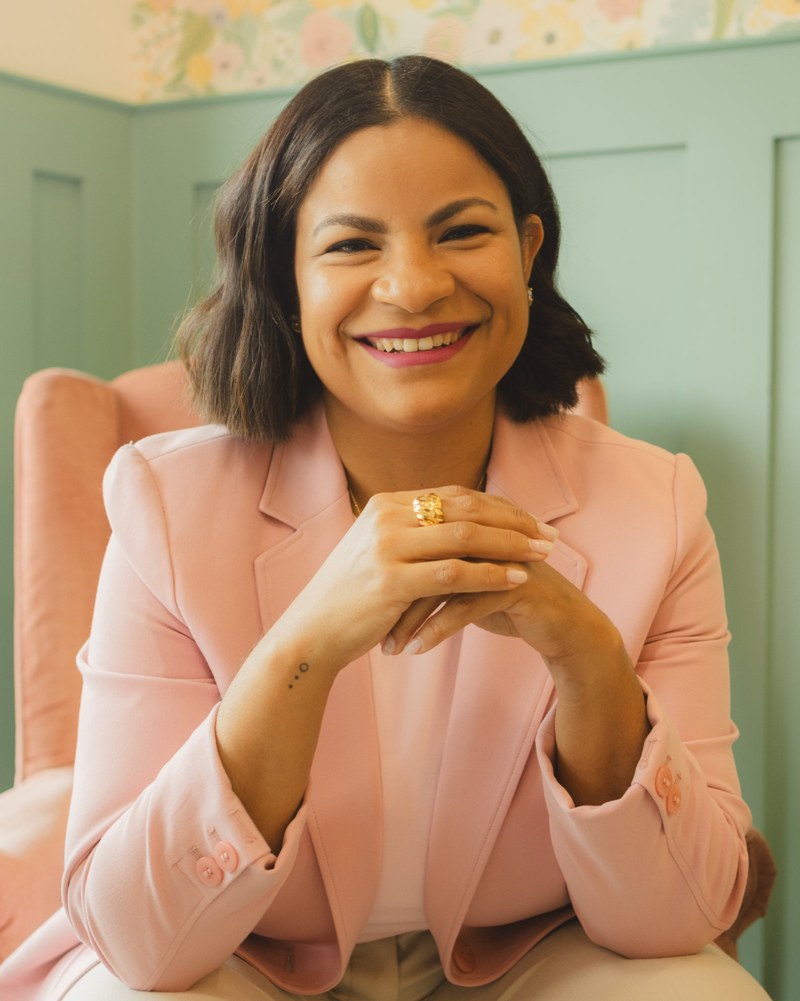
Ysi: Hello and welcome to The Forward Deployed Operator. I am Ysi, and I have the pleasure today of having as a guest Susie Bulloch, founder of Hey Grill Hey. She started in 2015 with a corner of the internet about backyard barbecue, and she built it into the most trafficked grilling recipe site. There are 750 recipes on this blog and a community of millions of people. The sauces and the rubs came after, because that community kept asking her to bottle what she was already teaching them to make. Since then, she has a self-published cookbook, her own Netflix series called Backyard BBQ Hero, an award-winning rub, and going into grocery, Home Depot, and Ace Hardware as a partner all at the same time. Let's welcome Susie to the show.
Thank you so much, Susie, and welcome to The Forward Deployed Operator. I am very excited to have you here today. Looking at your career and everything that has happened with Hey Grill Hey, it's amazing, and I want to thank you for your time and for saying yes to coming on the show to talk about all things operations.
Susie: Thanks for having me. It's been a journey.
Ysi: Yes, it has been. So you started this whole thing from a corner of the internet, recording and logging your recipes, building a community. And I read around 750 recipes and millions of people in this community. How did that become, from that, to now you have a full-on brand on the shelves? You have a cooking show on Netflix, which, by the way, is amazing. And I have here... this is my favorite spice, by the way.
Susie: Thank you.
Ysi: And I'm going to have to come visit you, because I need you to sign this.
Susie: You need a signature.
Ysi: Yes. Yes. So how did it come from writing recipes on a blog to this, what Hey Grill Hey is today?
Why did a stay-at-home parent spend two years on a recipe site before it made money?
Susie: It's been a slow journey. I think a lot of people talk about an overnight success, or things that happen really quickly. That was not the case with Hey Grill Hey, and it's never really been the case with me. I started the blog in 2015. So it's been 12 years of running my own business. And it started because I wanted to create a job where I could generate some income for our family and still have all of the time and capacity to function as a stay-at-home mom.
I had three kids at the time. I started my business when my youngest was one and my oldest was six. A very high-demand period of parenting, and I was the lead parent, and my husband was working full-time in a corporate setting. I had to figure out how to generate additional revenue for our family without maxing out my own time. I didn't have startup time to put into a business. I didn't have 80 hours a week. I was working in the fringe hours. I was working during nap time. I was testing recipes while my older two were at school for the first part of the morning, and my toddler was piddling around the kitchen banging pots and pans. So I didn't have the luxury of time. But what I did have was the luxury of support, and also a luxury of time in a different way, because my husband was full-time in a corporate setting. He was our main primary source of revenue for the household. So I didn't have to turn a profit immediately. I could build this over time.
I wasn't really profitable with Hey Grill Hey in the first two years. We called it my jobby. I treated it like a job. I was putting in the hours. I was logging the hours. I was waking up early. I was staying up late. But the revenue was, "Does this cost more to buy the ingredients to cook the recipes, or is it making enough money that it qualifies as a job?" There was a good two years in there where we weren't sure.
Ysi: Yeah.
What happens when a viral recipe hits two years of content already on the site?
Susie: And then we had some good breaks. Building up the library of content those first couple of years really mattered, because when we did have our first breakout viral video and they went to the website for the recipe, they stayed. There were dozens of other recipes for them to click through and to try, because I'd been working on it for two years building up that library. That was the first time that Hey Grill Hey really had teeth, in 2017.
My husband and I sat down and started running the numbers. We're starting to actually generate more than we're taking out of the business at this point. What does that look like? At that point I created a business plan. Now that I've proven the concept that this can generate money, how do we systematize this? How do we standardize this? And how do we execute on this consistently enough that it can become something meaningful? I had a little bit more time. My kids were a little bit older, still not super old, and I started putting a little bit more time into the business. By the end of that year, it had grown so much my husband actually quit his job in 2017.
I said, I either need to hire a nanny to help with the kids, I need to hire an employee for the business, or you can quit your job, come home and be lead parent, and in your fringe hours you can be my part-time employee. That made the most sense financially, and he was done with corporate life. He saw a lot of the time freedom we were able to get running the business together. So he quit his job, came to join me in the business in 2017, and then we started asking the bigger business questions.
We launched a couple of ebooks, to see if we could generate revenue through sales instead of just advertising.
Ysi: Yes.
Susie: We launched a subscription model that still runs to this day. It's called the Grill Squad. It's a private barbecue and grilling community with a ton of educational content. If you've never cooked a brisket before, I'll walk you through step by step how to make your first brisket. We built that as an additional revenue stream. And then the products came even later, the very end of 2018.
When did the community ask Hey Grill Hey to bottle the rub?
Susie: All through 2018, after I had another recipe go viral for my Sweet Rub, which is one of the ones you were holding, the base recipe for that. That recipe went viral and people were saying, "I'm making this at home all of the time. Can you please bottle this and make my life easier?"
Ysi: Yes, thank you.
Susie: And after enough of those requests, my husband said, "Okay, I guess we'll do a run." He never wanted a physical product company. We were living the passive income dream. It wasn't really passive income, because there's really no such thing. But in the sense that we were making money whether we were at home, whether we were sleeping, whether we were traveling, as long as the website was up and people were visiting the site, we were generating revenue. He was hesitant to give up that freedom and what we had built, because I built my business to be the perfect side business for a mom of three kids. I could work on my own time. I had something meaningful that I was passionate about and that I cared about. I built a community. At that point our followers had grown. We had hundreds of thousands of followers. It was a dream scenario, and to add products to the mix just sounded more like a headache than an opportunity.
But again, sometimes you just give the people what they want, and we saw enough requests that he's like, if people are asking to give us money, I guess we should probably figure out how to make it valuable for them. So we launched the first three seasonings in a test run. We did the smallest run a local co-manufacturer could make for us. I think it was 300-something bottles of each flavor, and we put them up on December 23rd.
What happens if you launch a food product on December 23?
Susie: You're not getting this in time for Christmas.
Ysi: Yeah. Why are you even buying it?
Susie: You would not buy this. It was a terrible time to launch a product. I was out of town. I was like, nobody's going to buy any of these anyway, so when I get back, I'll just help you ship whatever people do order. We sold out in 24 hours. My husband was in my mom's basement with my parents and the kids, helping him bag up and ship out product, because I was out of town when we launched it. I thought there's no way that this is going to go.
After that initial sellout, and the response we were getting, it was great to sell the product, but we received so many other signals, social signals, that this was a product that was impactful and meaningful. People were tagging us when they were getting their packages. They were showing us what they were cooking. They were so excited to have something of our brand in their actual homes, because some of them had been cooking my recipes for three years at that point.
Ysi: Yes.
Susie: It was a very tangible representation of the brand and what we had built. After that, my husband and I were both like, "Okay, I guess we make products now." We treated it like every other stream of revenue for the business. It was a little piece on the side, because it was the highest-needs baby in the family at that point. The products meant worrying about shipping, worrying about manufacturing, worrying about label compliance. It added so much complexity to the business. We kept it going, but it wasn't our primary focus, because the ad revenue and the other business we had built was still doing well.
Ysi: You're getting the long version of this, but I love this long version. I'm taking notes, by the way. This is why you see me head down, because there are a couple of things I want to go back to on this story.
How do you add a warehouse when retailers start asking for the product?
Susie: A couple of years ago, we'd been building this slowly on the side. It was one of our growing revenue streams. It was growing faster than any of our other revenue streams, so it was worth paying attention to. We did invest in the product company, larger inventory orders. We were just doing direct to consumer, and then retailers started coming to us and saying, can we carry your stuff? My customers are asking for your product.
Ysi: Amazing.
Susie: Then we had to figure out how to ship to retailers, how to price for wholesale, and how to case-pack things. We were retroactively solving problems, because more people wanted to buy the product, which is great, but we didn't know how to solve those problems. So we ended up starting our own warehouse. Now we have a warehousing company that's fulfilling product through the EDI shipping systems that we didn't know existed six months before.
Then we said, I think we need to hire somebody to actually manage the marketing and sales of the product, because we don't know how to manage dealer relationships. I ended up hiring somebody I'd been working with on the influencer side of a grilling company that was local. He came in. Then we started growing the product team a little bit. A lot of this truly happened organically, which is so great, because we had spent those years building the brand and the community first. As the products came, it was a natural extension of who we are and what we care about. Our whole thing is helping people make better barbecue. The products embody that in a tangible way, beyond the education. It's a physical assist in making it easier to have a great cooking experience.
It always made sense. In theory, the hardest part was figuring out the logistics. We slowly grew the product side. We never tried to outgrow our boots or outspend our capacity and our ability to keep generating revenue. To date, we're still 100% self-funded. We've grown this thing slowly and profitably over time.
What happens to food blogs when people ask AI for the recipe instead?
Susie: With AI coming in and changing everything, not a lot of people are aware of this outside of the food blogging industry, or that small corner of the internet. There were thousands of people that owned their own websites, and we were the independent internet. We were the independent voice on the internet. You could go to any one of these websites and experience a new point of view, learn something different, learn something from a unique person's perspective, and have it mean something because it was relationship-based.
With AI, everything now is aggregated. You're not learning from a person. You're not getting a point of view, and you're not going to people's websites anymore. People using AI has completely cut off the pathway from somebody asking a question, or wanting to know something, and ending up on an independent website. Now they're just staying within AI.
As soon as AI was released, I'm on the board of a food blogging conference, and within that month I said, "If you're not talking about this at the next conference, you're already behind, because this will foundationally change the way people access and use recipes." We already know that people don't want the story before the recipe. They don't want the ads. They don't want a popup. They hate the way blogs are set up, because it's not convenient and it's not easy. It is an extra step. It's time consuming. They'd rather have a recipe from ChatGPT that may not work, if it's easy and clean and easy to follow. It just is.
It required a sense of personal humility to acknowledge that the change was coming, and that the way users interact with content was changing enough that we needed to pivot, because this independent website we'd built was no longer going to generate revenue the same way. And it's all come true. In the last three years, I would say most food blogs that were set up like mine are probably down 70 to 80% in total revenue from two to three years ago. And that's true for ours as well.
How do you choose between shrinking the team and going all in on product?
Susie: We saw this coming, and I looked at my husband in April of last year and I said, "We're at the tipping point. We have to decide right now. Are we going all in on our product company that's been this little side revenue piece, or do we shut down everything extra that costs money, and do we shrink our team, and do we downsize, and do we just live off of whatever ad revenue is left for as long as it lasts, from the people that still want to go to a website directly?"
Ysi: Yeah. Because they're still out there.
Susie: Yes. It's like the people that want to shop local, or they want to shop at a mom and pop shop instead of a big box store. We sat down and talked about it. We spent three hours in the car one morning listing the pros and cons and the merits of everything. Later that day, we didn't even come to a decision.
Why put your name and face on a barbecue brand?
Susie: Later that day, I'm walking with my daughter through a Target, and I was like, "Here's what dad and I are dealing with." She's 16 at the time. When I started Hey Grill Hey, she was six. This all ties in, because the reason I started a grilling blog: I was already into grilling and barbecue and food, and I had written copy for other blogs. I was familiar with the industry. I loved barbecue, but the companies I'd been writing for before that never posted my full name, because there was this sense that maybe the recipes wouldn't be as well received if they knew the author was female, in the barbecue and grilling world.
Ysi: Oh.
Susie: That didn't sit with me, 12, 13, 14 years ago. I said, if I'm going to start this thing, I'm going to put my name on it, and I'm going to put my face on it, and people are going to know that this is a girl writing these recipes. Because if I want to believe that there's space for women at every table, I have to take up space. If I want my daughter to grow up believing that there's space for her at any table, she has to see that from somebody close to her that's living it. She was a big motivator for me starting my blog, and for branding myself as the founder, because there are a lot of blogs where you don't know the face and you don't know the name, and that's not part of the experience.
I chose that intentionally from the beginning, and it was never about fame or followers. It was about exposure, and about approachability, and opening those doors for more women to enter the space.
Flash forward 10 years, we're talking about what we're going to do next with this business and this industry, and I bring her into the conversation, and she says, "You're just going to go for it, right? You're not the type of person that would scale down and shut it down just because things got hard."
Ysi: Not who you are.
Susie: It was really helpful.
Ysi: To have her see you. And the result of what you started, and the reason why. I totally understand the feeling. Having Victoria coming to say hi to you is part of me building that. When she was six for you, my daughter is eight, and I started this business almost two years ago. This is the whole purpose: for them to see that they have the right to take their space at the table and do what they want, and to see what it looks like when things go hard.
This is part of what I was taking notes on. You have been showing a pattern of going with the flow, and whenever you've had to pivot, you just do it. Now we need a business plan, because now there's a product, and now we have to figure out logistics, and then the warehousing. In all of you recounting the story, I didn't hear you saying, it got hard, so we did something else, or we stayed where we were. It got hard, and then you push through. You open that door, or open the window, and knock down the wall to get to the other side.
Thank you for sharing all of that, because part of what I want this podcast to deliver is to show every other brand out there: you don't build a brand and just grow it, and magically you are at the top, and then you have a Netflix show, and then you have a book, and it just happened. It doesn't just happen. Operations is difficult, and it needs to be prioritized.
When you say that back in April last year you had to decide what you were going to do, you knew the product business needs the people. It needs the attention. It needs the business plan. It needs everything around it aligned. And I remember when we met at the beginning of this year, you were showing me a spreadsheet, and I was like, I love this woman. You were on top of your forecasting, all of your revenue streams. It's beautiful to see you as the founder, the ideator of this brand, the dreamer of this brand, and you understand what needs to happen behind the scenes for the product to be out there.
I want to pause here, because I love the way you framed lead parent instead of default parent.
What is a lead parent, and how do two founders trade the role?
Susie: It's a choice for us, and it always has been.
Ysi: Yes, it is a choice, and it is powerful to call it a lead parent, because we're not just in the background. I am a lead parent myself. We do take turns sometimes. But I am the lead parent too, and I've heard people say "the default parent," and it's just a negative. There's a power in the lead parent. Thank you for talking like that. I'm going to start using it from now on.
Susie: Good. I took it from a friend, and a couple that Todd and I have known forever and look up to. They run their own fulfillment, and they started their own podcast. Very similar, when you have two ambitious adults and you have children. Lead parent is how we delineate some of the responsibilities that go into parenting and don't get talked about. It's given us language to talk about them, to make clearer role assignments, and then move forward with clarity.
We have shifted back and forth on lead parenthood three or four times over the last 12 years of Hey Grill Hey. It's never been one set thing that stays forever, because a lot of our work is project-based. If he has a larger product or project that's six months, I'm taking on lead parent duties.
Ysi: Yes.
Susie: And we'll shift. Who's reading the emails from the school? Who's ordering the yearbooks and the school photos this year? That was my husband, because I'm deeper in the business side of things right now than he is. We hired some help on the finance side. It's a constant moving target. Being able to shift lead parent duties is an intentional conversation, and knowing what those responsibilities are matters, because the mental load that doesn't get talked about, we have to talk about it. It gets covered.
This year my husband scheduled our fall family photos for our Christmas cards, and he'll probably order our Christmas cards. I can do what I do because of the partner that I have.
Ysi: I love that. I think we should define this as a role, officially, the lead parent role, with every responsibility. Whenever somebody has to take it on, you read through everything that needs to get done throughout the year, and then you do the shift. It doesn't have to stay. This is my operations brain, thinking about building an SOP around the lead parenting role.
Susie: We've never actually written it down, because my husband is not that way. You and I are going to talk about spreadsheets and lists and business plans, and he is, I will just put out the fire that is in front of me at this very moment. He's not very forward thinking. He's very present, which is its own gift and its own skill. It's enviable in so many ways. In our relationship, it's not going to be a list. We're going to have a conversation about it, and then he's going to remember it somehow. I don't know. I have to write stuff down.
Ysi: He will just do it. They are amazing in their own ways. My husband is more the planner. He knows what's going to happen in the next 5 to 10 years. And I'm like, no, I need to know this week and the next four weeks. This is what I'm taking care of right now.
Break
Every system you fixed became someone else's win. The next one has your name on it. An eight-week live cohort. You solve a real problem inside a real company, ship a working AI system, and leave with the case study, the build and the title: Forward Deployed Operator. Join the waitlist at fdoschool.com. That is fdoschool.com.
LiliBloom makes personalized wooden and acrylic keepsakes out of Montreal. It is my choice for any gifts that I want to give to my friends, my family, my customers. First birthday photo boards, cake toppers, first day of school signs, anything in between and anything you need. Every piece is thoughtfully designed and crafted with love, care, and an eye for detail, making your celebrations and your gifts even more special. Find them on Etsy as LiliBloomShop. That's L-I-L-I-B-L-O-O-M-S-H-O-P. LiliBloomShop.
What was hard about turning free recipes into a physical product?
Ysi: That's why I have the list, because then I can keep up with whatever he's doing. You mentioned that when you decided to bring in physical product, to convert those recipes into physical product, you were hesitant to give up that freedom, and that it sounded more like a headache. What do you mean by that?
Susie: Products are hard. At their core, it is complex. It is a very complex space. I don't know if I told you this before. I didn't even know that us having a product company, a food product we sold to people, was called CPG. I didn't know the name of that industry until last year.
What do you miss by not knowing your industry is called CPG?
Susie: In April I had already decided to go full-time onto the product side of the business. I didn't know it was called CPG until the Fancy Food Show in June. I went to the Fancy Food Show. I had been there. I'd spoken on the Fancy Food stage as a panelist, as an influencer, on what it looks like to work with brands. But I was seeing all these signs hanging down. Startup CPG. New in CPG. And I was like, Todd, what is CPG? We had to Google it at the show. We didn't know. And I was like, oh, we've been running a CPG business. We're doing seven figures in sales and we didn't know our industry.
Ysi: I find that as a blessing also, because when you know too much before going into the thing, it gets scary, and you're like, maybe not. I have found that as a blessing. I had to build a corporation, and then now I have a US subsidiary. It's getting nuts. I'm not sure, if I knew all these things, that I would have pulled the thread. I would have been hesitant if I knew all this.
Susie: I think it's a blessing and a curse. It was a blessing because I didn't get bogged down in what it should look like. I didn't get bogged down in comparison. I didn't know what was happening in the industry. I wasn't on LinkedIn reading about other people landing huge retailers. I wasn't tied in. I was blissfully unaware, and living in a state of gratitude that anybody would buy my products at all, that retailers were interested at all, and that anybody wanted to come work for my little business. It always felt surreal. The milestones we hit were never tainted by anything. It was this cool thing that we managed to do, that we didn't even know we could do six weeks ago, and now we're doing it. Look at that. That's so cool.
It gave me, and I think my team as well, room. We weren't trapped comparing ourselves to other businesses. We weren't looking at the retailers other similar brands were landing. We weren't looking at revenue numbers or projections. It was more organic at that point, and I think that was lovely. I think it's what allowed us to keep going, because if the product side had been this intense from the beginning, we probably wouldn't have kept going with it.
Ysi: Yeah.
Susie: For us it was what it was meant to be. A slow build alongside the other revenue, until it grew so much that it couldn't be ignored anymore. We said, we really have to make a decision, and we committed to the pivot. I'm grateful.
The downfall of not doing that market research, and not knowing the industry, and not knowing the standards: we spun our wheels a lot. Blogging was not a standardized industry. We made that up. I was one of the first couple hundred people to install programmatic advertising on my website, with a new ad company that had just launched and now services thousands and thousands of websites. We were the wild west. There was no industry standard for food blogging when I started.
When we got into products, I took that same cowboy mentality. Rub some dirt in it and keep moving. We'll figure it out. Fancy Food Show in New York, in June of 2025, I was like, oh, CPG is an industry. This trade show is part of that industry. There are experts on panels. There are consultants. There are brokers. We never had a broker. Everything we sold, we sold directly. It was eye-opening. So much of this is standardized. There are existing business plans. There are roadmaps we could set our course to. We had been directionless with the product company. Let's put it up and see what happens.
Ysi: Yes.
Susie: When we shifted to being more intentional, we hired a consultant to come in and say, "Here's your roadmap for retail." And we went, oh, a roadmap for products. A lot of what we did early on, we did on hard mode, because we didn't know there was help. We didn't know there were experts. We weren't tied in enough to know who to ask, or how to ask, because we didn't speak the language. There are so many acronyms. CPG alone was one I didn't know. There are 8 million acronyms. As a team, we were learning a whole new language.
I sat down with my whole team and I said, the boat is changing directions. We're all going this way. You are welcome to come with us, but it's going to be crazy. And everybody said, okay, let's go. We spent the last year restructuring everything. When we met earlier this year, we had our roadmap, our plan, our forecast, and we were still fine-tuning the nuts and bolts. Now, just over a year later, it feels like we're on a firm foundation for the product company in a way that we never were before.
How do you stock for a Netflix demand spike you have no history for?
Ysi: I love that. In that foundation, the Netflix show dropped in August, right?
Susie: Yeah.
Ysi: What happened to your forecast?
Susie: Oh my gosh. We've had our best year on Amazon ever, for sure. This comes down to the foundation and accessibility. We started working on Amazon a year ago. We optimized all of our listings. We got our product specs up and ready. We nailed down our fulfillment process and our inventory projections so that when the publicity hit, when the exposure was there, we could convert that into sales. August was a disproportionately great month for us on Amazon, because we had the platform set and ready for something to take off, and it did.
Ysi: I love that. That means you either have a very fast turnaround from your co-packer, or you have a lot of inventory. Which one is it?
Susie: We have a decent amount of inventory, but our biggest benefit is that we do our own fulfillment in-house. We built our own fulfillment unknowingly. We built it because we needed it. We needed space to ship product direct to consumer, and then retailers came, and then we needed space to fulfill orders to retail and build pallets. The fulfillment side grew organically. We didn't know how big of an asset that would become. We keep a decent amount of inventory in the warehouse at all times. If we know something is coming down the pipeline, we can preload Amazon. And direct to consumer is set up two steps away from me right now. I could go out and ship an order if things start to pick up. It gives us flexibility to turn around at a quicker pace.
Ysi: Love it.
How does a self-funded brand run retail lead times and payment terms?
Ysi: You're doing grocery, Home Depot. Are you in Costco, too?
Susie: Right now our biggest focus has been outdoor, hardware, sporting goods. Ace Hardware is a huge partner of ours. Academy Sports, throughout Texas and the South, carries our products. Fleet Farm throughout the Midwest. Scheels is kind of nationally throughout the North. Those have been our major retail partners so far. We're also launching into Home Depot by the end of this year. This year has been spent pitching grocery, because we've never pitched a retailer before. Even Home Depot came to us. We've been fortunate to have so much organic brand awareness, even among the buyers in these categories. They know who's doing what, because they follow on social media. That brand presence has done so much for us in retail.
This has been our first year pitching grocery and pitching national retail. We're optimistic. We have a couple of preliminary yeses from a couple of great retail partners that we're hopeful about for next year, but nothing set in stone. I can't give you a launch date.
Ysi: I'm asking because, based on experience, they all have different lead times. They all have their own payment terms. Are you spreadsheeting your way into this, or are you using systems? How is the back end being managed?
Susie: QuickBooks and spreadsheets, mostly, for now, because that's what's working. I think we can scale that for a while before we shift to any type of software. The biggest thing for us is cash flow. We haven't taken investor capital. We just got our first business loan this year, ever, for larger inventory purchases. And we're going to be using some factoring to help us bridge the gap between what we're doing now and large retail payment terms, because that's very different from what we're used to.
Ysi: It is. Brands want to grow, and they want to get into grocery, into the large chains. Those companies have payment terms that are tough. Then you, as the brand, have to fund your inventory and your ingredients and your co-packers. And you're asking, when am I going to get the cash back? It's tied to those payment terms.
Susie: Yep.
How should a CPG brand show up when AI builds the grocery list?
Ysi: You talked about how AI changed the blog industry. Something I see a lot is how it's also changing consumer buying patterns. I have a couple of AI assistants working for me in different areas, and the other day I created one just to do my groceries. What is Hey Grill Hey doing so the AI tools people already use can find Hey Grill Hey and add it to a grocery cart?
Susie: One reason Hey Grill Hey grew as much as it did early on was my focus on SEO, and understanding how Google surfaced results. The way AI prioritizes brands is different from traditional Google search, because Google search was focused more on intent, and then who bought the placement. I think very quickly we will shift into a purchased placement ecosystem. It's already starting with ChatGPT. I don't think we're far off of the same thing as Instacart. When people are doing brand research or they're ready to buy, brands will be able to pay for that position. They call it position zero. Before the first organic result is position zero, and that will be for sale across brands and across AI platforms. That's coming faster than a lot of people have budgeted for.
It'll be interesting to see if it adds an expense, or if that expense gets pulled from other platforms, Meta, Google ads, programmatic advertising. Will marketers shift ad spend from programmatic over to paid AI placements?
For organic results now, a lot of what drives placement used to be called off-page SEO. Backlinks. Other websites talking about you. That was a portion of it, but a majority was on-page SEO. What did you say about yourself? What did you write about the recipe? How are you the expert? How are you qualified to deliver this information to Google's user?
With AI, that third-party, off-page brand awareness matters much more. What is the internet saying about your brand as a whole, and that is more meaningful than what you say about yourself. We are conducting internal audits of our product listing pages, to make sure our on-page SEO, or GEO, which is what they're calling it for generative, is in line with what would pull our information up in the results, in what would get recommended across the AI interfaces.
Off-page is huge. That's when we start talking about PR, when you start talking about pool, when you start talking about your products being listed in listicles, or America's Test Kitchen for best whatever, or the three brands we're buying this summer from Better Homes and Gardens. Those articles and lists, and the public opinion of your brand, are much more meaningful to generative AI right now.
Ysi: Because they pull everything at once.
Susie: Generative AI is an aggregate. Before AI, Google's ability to do that was much smaller. All they could do was track backlinks to your website, what they were, and the domain they came from. Generative AI can pull the entire internet at a snapshot in time and get a read on your brand temperature.
Ysi: It's crazy.
Susie: That is huge right now, and paid is what's coming.
Ysi: Thank you for sharing that. Not everybody is watching how AI is changing the industry, or how to pay attention to where their products show up.
What operational decision almost did not happen, and then filled the slow season?
Ysi: I ask all my guests this. What's the one operational decision you almost didn't make, that after you made it, changed everything?
Susie: Anytime we launch a new SKU, we did a lot of this organically, and the hard way. We were not conducting market research. I would say, I want to make this, and then we would make that. Years ago we were talking about bundles or gift kits. What would make it easier for people to gift our product, or an experience they could have, all in one box. We talked about a brisket box. We walked through a handful, and we landed on a turkey kit.
It included everything: the brine, the brine bag, the seasoning, and then I came up with a glaze. All those products were exclusive to the kit. You couldn't buy them independently. Let's just make a test run this year. Let's do 500. My husband made this operational call. And I was like, that is risky, even 500, because it's 500 units, but it's 500 of each product, plus a custom box, plus a brine bag. Our investment was pretty significant.
Without me knowing. I was so mad, but I've thanked him for it a million times since. Without me knowing, when he called to place the orders, he did 2,000 of each. He's like, "I think this is going to be better than you think it's going to be." We launched the turkey kits, and we sold out of all 2,000 turkey kits in 48 hours. And we were like, oh, so we're making like 15,000 turkey kits a year. October is a terrible season for barbecue. Nobody's grilling in October and early November. Historically that was a low month for us in total sales. This one product, retailers carry it now as well, but it's heavily direct to consumer, has been a cash flow blessing at the end of the year, during a low season.
I'm grateful. It was an operational decision, and it was also instinct. He made that call in the moment because he had a feeling about this product, and it was the right call.
Other decisions we've made are more market-based. Moving into products, we did spend money on a consumer research report. We have gone through a product redesign, and a lot of the results of what we've done this last year are still ahead of us. We'll see next year if it pays off. That turkey kit was an impulse decision with an immediate payout.
That's something I still love about Hey Grill Hey. We are building forecasts, and we're taking consumer research into account, and we're planning national launches. And yesterday I tested a limited release recipe that will just go DTC on our website. With the size we are, we get to stay in tune with our audience. We do fun things. We can do limited drops. We can do a quick launch, and we can test and iterate, and increase or decrease based on what we're seeing in real time, because we're still a small team. We're in a sweet spot in the middle right now.
I'll be grateful when we grow, and it'll be fun to move into the next phase. I'll also always be sentimental about this last year, where we were brave enough to dream big and to start asking for more, and still small enough to have that connection with our core team and with our audience. I think that's something you eventually lose as you grow. I feel like I'm in my senior year of high school. You know that it's changing, but you're still in it. That's how we feel right now.
What is the one thing you do not want the business to become?
Ysi: We have a tradition on the show where a guest leaves a question for another guest. This one lines up with what you just said. The question that was left for you is about the north star. If you think about the north star of your business, what is the one thing you don't want the business to become?
Susie: I always want Hey Grill Hey to be known as a woman-owned and a woman-started business. This goes back to my daughter at 6 years old. It ties into one of our core values now, approachability and accessibility. We're not the traditional big barbecue bro brand. That's not who we are, and that's not who I speak to. I want to talk to your daughter watching Netflix. I want to talk to the mom who just wants to cook something easy and delicious on a Wednesday and feels confident enough to fire up the grill. I'm focused on bridging the gap between what barbecue was and what it can be, and who it can be for.
I hope that carries through, no matter what direction the brand goes, or how many store shelves we're on. I hope you look at Hey Grill Hey and you flip the bottle around and you see my picture, and you're like, oh, cool. I want it to be a little bit of a surprise, and a little bit of a delight, that you can find a brand like that on a national store shelf.
Ysi: The name of the brand, whenever I read it, it's like, "Hey girl, hey." Not girl. I can see the twist in there, and I appreciate that.
If a growing brand had to drop one focus, what should it drop?
Ysi: I'll ask you now to leave a question for another guest. It would potentially be a product-based brand. Not necessarily. It is a product-based brand.
Susie: This is a question I'm currently asking myself, so I'll pass it along. Maybe as I listen, they will help me answer my own question. If you had to eliminate one area of focus from your business right now, what would it be?
Ysi: Wow.
Susie: Sometimes we get so focused on growth that we keep adding and adding. I think we have to do spring cleaning. You have to routinely trim, and clean out, and change. It would be interesting to hear from another brand what they need to clean up right now, and stop focusing on, so they can focus on the bigger work.
Ysi: There is an episode coming up that you may find helpful in that sense. I'll send it to you. I'll pin it, and when we release it I'll send it to you directly. I remember the minute this person talked about exactly this. Thank you so much, Susie.
That's it for this one. Follow the show so the next episode finds you, and the newsletter goes out every Tuesday. The link is below. See you next time on The Forward Deployed Operator.
Related
- What Is a Forward Deployed Operator? cornerstone
- How to Ship Chocolate in Summer Without It Melting episode 4
- What to Do When No Co-Packer Will Take Your Product episode 2
- Fix Your Data Where It's Born episode 3